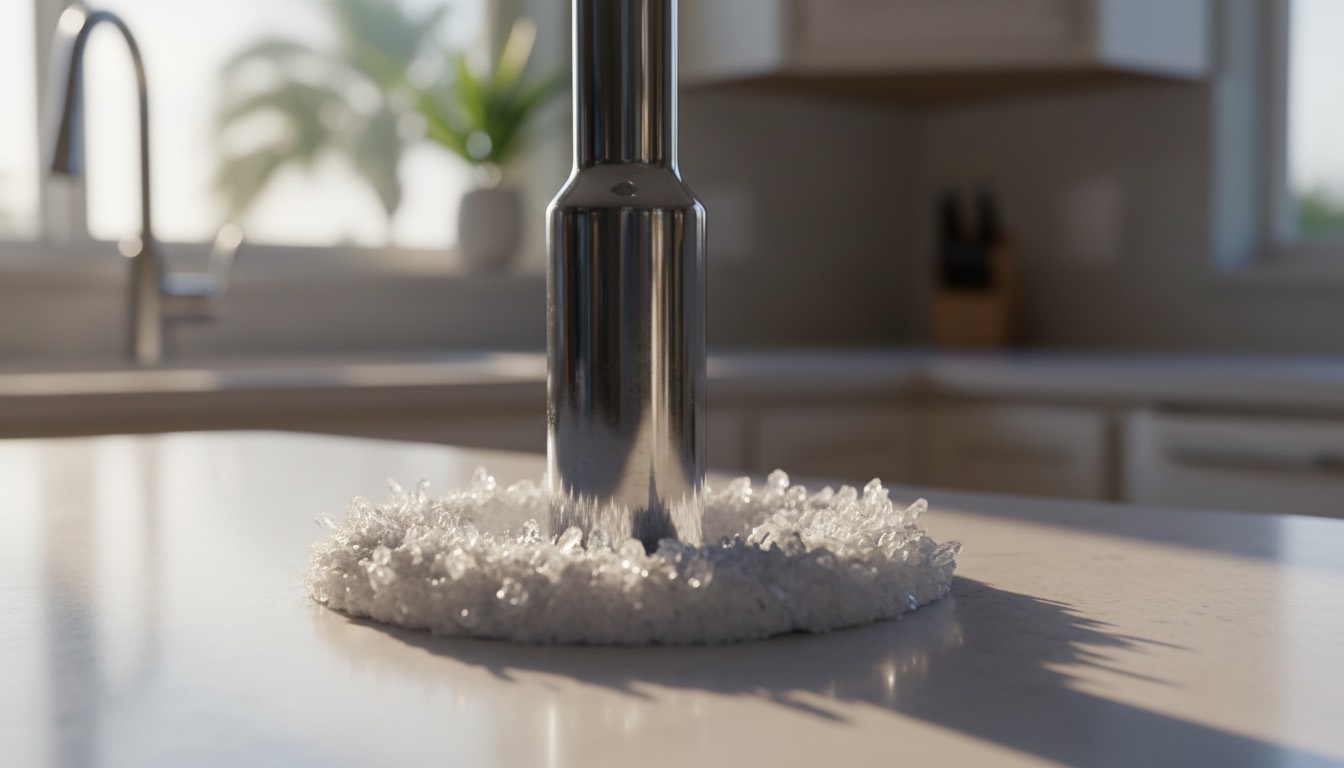
If you live in Florida and notice white spots on your dishes after the dishwasher, soap that will not lather, or dry skin and hair even with good products, you almost certainly have hard water. You are not alone: the Water Quality Association maps Florida among the states with the hardest water in the country. The good news is that hardness is a well-understood, fixable problem, not a contamination scare.
What is hard water?
Hard water is simply water with a high concentration of dissolved calcium and magnesium. It is not contamination in the sense of immediate danger, it is geology. The U.S. Geological Survey classifies hardness into four bands, expressed in milligrams per liter as calcium carbonate (mg/L as CaCO₃):
| Classification | Level (mg/L) |
|---|---|
| Soft | 0 to 60 |
| Moderately hard | 61 to 120 |
| Hard | 121 to 180 |
| Very hard | Above 180 |
Why is Florida water so hard?
Most of Florida's water comes from the Floridan aquifer, a limestone formation, calcium carbonate rock, that underlies nearly the entire state. As water percolates through that rock it dissolves minerals and arrives at our taps with hardness that often lands in the USGS very hard band. In parts of central and north Florida, even higher readings are documented. That limestone geology is the same reason private wells across the state carry hardness, sulfur and iron, which we cover in our complete Florida well water guide.
That is why the Water Quality Association ranks Florida among the states with the hardest water in the United States, alongside Texas, Indiana, Nevada and Utah. Whether you are on city water or a private well, the underlying limestone means hardness is the default, not the exception.
How does hard water affect your home and health?
Three areas feel the effect of hard water every single day:
- Appliances and plumbing: scale buildup from hard water shortens the life of water heaters and reduces their energy efficiency, because the mineral crust insulates the heating element and narrows pipes. The Water Quality Research Foundation has documented these efficiency and lifespan losses across household appliances.
- Skin and hair: studies published in the Journal of Investigative Dermatology show a correlation between hard water and worsening atopic dermatitis, especially in infants and young children, because hardness interferes with how soap rinses off the skin.
- Cleaning and soap: the American Cleaning Institute documents that hard water raises soap and detergent use, because the dissolved minerals neutralize surfactants before they can clean, leaving the familiar soap-scum film.
How do you measure water hardness?
There are three practical paths, in order of precision: first, check your utility's annual Consumer Confidence Report, which is required and usually published around July; second, use a test strip from a pool-supply store or online for around ten dollars; third, get a full laboratory analysis, which also flags metals, iron and chlorine. If you are on a private well, the report option does not apply to you, which is one more reason a direct test matters, as we explain in how often you should test well water in Florida. Prevent Water offers a free in-home analysis with calibrated equipment and an on-the-spot reading.
What actually fixes hard water?
Three approaches with proven results:
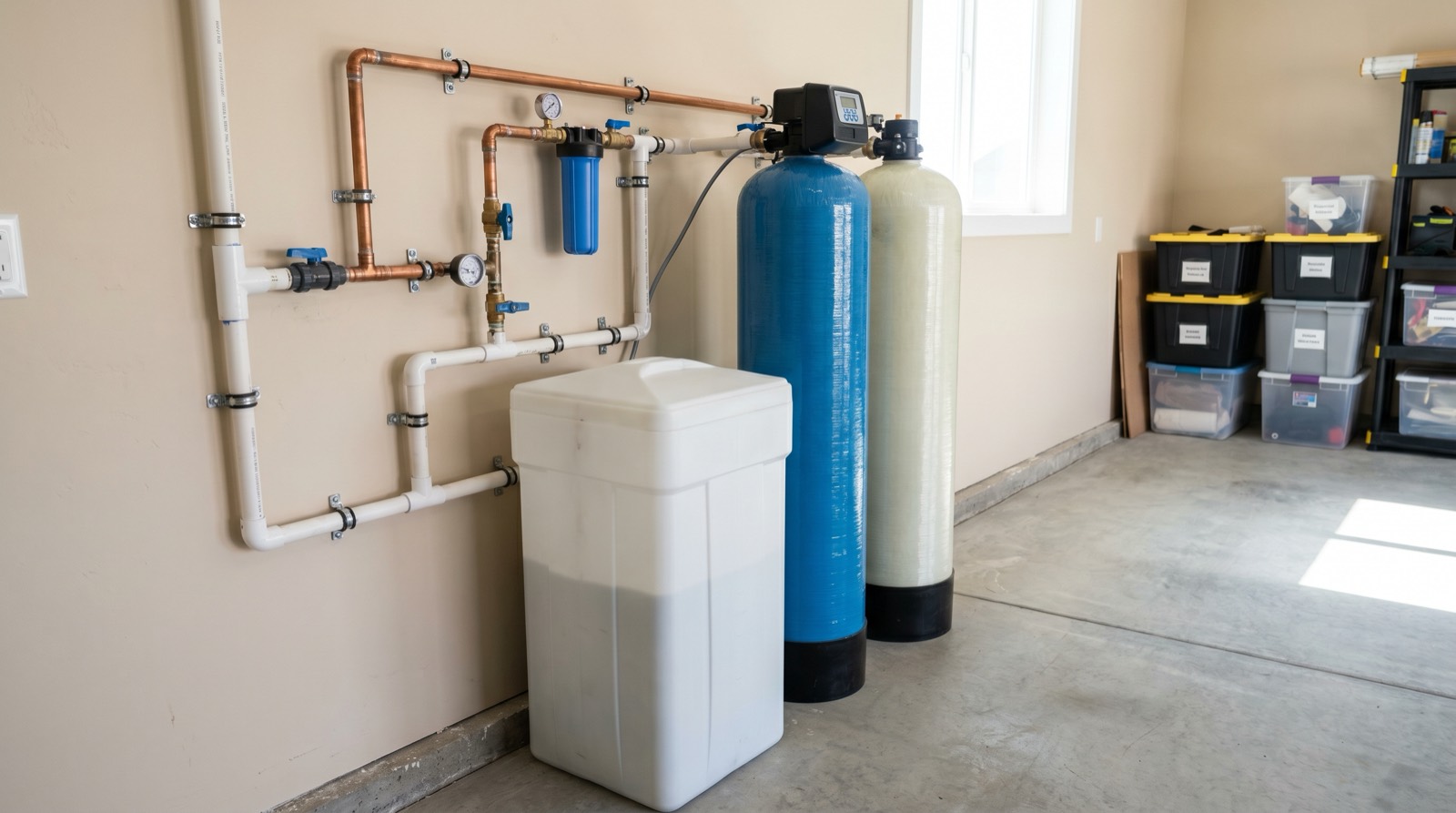
- Salt-based ion-exchange softener: the industry standard, certified to NSF/ANSI 44, which reduces hardness to nearly zero. It needs periodic regeneration with salt and discharges a brine.
- Salt-free conditioner (TAC): a newer technology that crystallizes the minerals instead of removing them, preventing most scale without using salt. It is gentler on the environment and adds no sodium.
- Whole-house hybrid systems: these combine softening, chlorine filtration and sediment removal in a single installation at the home's entry point. It is the most complete solution, and it overlaps with the whole-house treatment many Florida families end up choosing.
Hard water is rarely the only thing in Florida water. The same test that reads your hardness usually reads chlorine and metals too, which is why pairing this with our guide on chlorine and chloramine in the shower gives you the full picture. The honest first step is knowing your numbers. A free in-home test measures your real hardness in about twenty minutes, with no pressure to buy anything.
Frequently asked questions about hard water in Florida
Is hard water dangerous to drink?
No. The minerals in hard water are calcium and magnesium, and the USGS treats hardness as an aesthetic and nuisance issue, not a health hazard. The EPA does not set an enforceable health limit for hardness. The real costs are practical: scale on plumbing and water heaters, more soap and detergent used, spots on dishes, and drier skin and hair. So hard water is a quality-of-life and appliance-life problem, not a poison.
Why does my Florida water leave white spots and scale?
Those white deposits are calcium carbonate, the same mineral the water dissolves out of the Floridan aquifer's limestone. When hard water dries or is heated, the dissolved calcium and magnesium precipitate out as scale on faucets, glassware, shower doors and inside your water heater. The harder the water, the faster the buildup, and much of Florida sits in the USGS very hard category, above 180 mg/L as calcium carbonate.
Can hard water make my skin and hair worse?
It can contribute. Hard water reacts with soap to leave a film, so skin can feel dry or filmy and hair can feel coarse. Research published in the Journal of Investigative Dermatology found a correlation between domestic water hardness and worsening atopic eczema, especially in infants and young children. It is a contributing factor for sensitive skin, not the sole cause, which is why families with eczema often notice a difference after softening.
Does a water softener remove healthy minerals I need?
A salt-based ion-exchange softener swaps calcium and magnesium for a small amount of sodium. The minerals it removes are a minor dietary source compared with food, so you are not losing meaningful nutrition. People on strict sodium-restricted diets sometimes choose a salt-free conditioner or a potassium chloride softener instead. A free in-home test tells you your actual hardness so you can right-size the system rather than guess.
Will a reverse osmosis filter solve hard water for the whole house?
No. Reverse osmosis removes hardness minerals, but it is a point-of-use device, typically installed under one kitchen sink for drinking water. It does nothing for the showers, laundry and water heater where scale and dry-skin problems actually happen. For whole-home hardness you need a softener or conditioner installed where the water enters the house, with RO as an optional extra layer at the drinking tap.
Sources
- U.S. Geological Survey. Water Hardness and Alkalinity, Water Science School. usgs.gov
- Water Quality Association. Water Hardness Map of the United States. wqa.org
- Water Quality Research Foundation. Effects of Hard Water Scale on Appliance Efficiency and Life. wqrf.org
- Journal of Investigative Dermatology. Domestic Water Hardness, Atopic Eczema, and the Infant Skin Barrier. 2016. jidonline.org
- American Cleaning Institute. Soap and Detergent Performance in Hard Water. cleaninginstitute.org
- NSF International. NSF/ANSI 44 Residential Cation Exchange Water Softeners. nsf.org