PFAS, short for per- and polyfluoroalkyl substances and nicknamed forever chemicals, have been at the center of the U.S. water-quality conversation since April 2024, when the EPA published the first binding federal limit for these compounds in drinking water. If you live in Florida, this directly concerns your home, and this guide explains why, plainly and with sources.
What are PFAS?
PFAS are a family of more than 12,000 synthetic compounds, used since the 1940s in fast-food packaging, waterproof clothing, nonstick cookware, firefighting foams and dozens of other industrial and household products. What makes them useful also makes them dangerous: the fluorine-carbon bonds are so stable that they do not degrade in the environment or in the human body, which is where the nickname forever chemicals comes from.
When discarded or released industrially, PFAS contaminate soil, rivers and groundwater. Because Florida leans heavily on the Floridan aquifer as a drinking-water source, any regional contamination tends to find its way into residential systems, the same pathway that carries hardness and other minerals through the limestone, as covered in our Florida well water guide.
Why is Florida in the path?
Three state characteristics make PFAS exposure a priority here. First, the density of military bases and airports, where PFAS-based firefighting foams were used for decades. Second, the historic presence of chemical and paper industry that emitted PFAS. Third, the shallow water table and karst geology, which make it easy for pollutants to infiltrate down to home water.
A USGS study published in 2023 detected at least one PFAS compound in 45% of drinking-water samples collected across the United States, with higher concentrations in urban and industrial regions, including several points inside Florida.
What does the health research show?
According to a report from the National Academies of Sciences, Engineering, and Medicine published in 2022, PFAS exposure is associated, with high confidence, with:
- Increased risk of kidney and testicular cancer
- Reduced immune response to vaccines
- Decreased birth weight
- Increased serum cholesterol
- Thyroid disorders
The Agency for Toxic Substances and Disease Registry (ATSDR), part of the CDC, reinforces these conclusions and recommends that families in at-risk areas reduce exposure whenever possible.
What is the new EPA rule from April 2024?
On April 10, 2024, the EPA announced the first mandatory federal drinking-water standard for PFAS, setting maximum limits for six specific compounds:
| Compound | Maximum contaminant level (MCL) |
|---|---|
| PFOA | 4.0 ppt |
| PFOS | 4.0 ppt |
| PFHxS | 10 ppt |
| PFNA | 10 ppt |
| HFPO-DA (GenX) | 10 ppt |
| Mixture of four PFAS | Hazard Index of 1 |
For context, 4 parts per trillion is about four drops of a compound in an Olympic-size swimming pool. Municipal water systems have until 2029 to comply. Until then, the practical responsibility for ensuring safe water inside the home is far greater, which is the same theme in our comparison of well water versus city water: agencies regulate, but the last line of defense is at your tap.
How do you reduce exposure at home?
NSF International certifies filters specifically for PFAS removal under NSF/ANSI 53 and NSF/ANSI 58. The three most established approaches:
- High-quality granular activated carbon (GAC): effective for long-chain PFAS when the media is changed on schedule.
- Ion-exchange resins (IX): good performance on short-chain PFAS, which are harder to capture.
- Reverse osmosis (RO): removes practically all PFAS, but is usually installed only at the kitchen point of use.
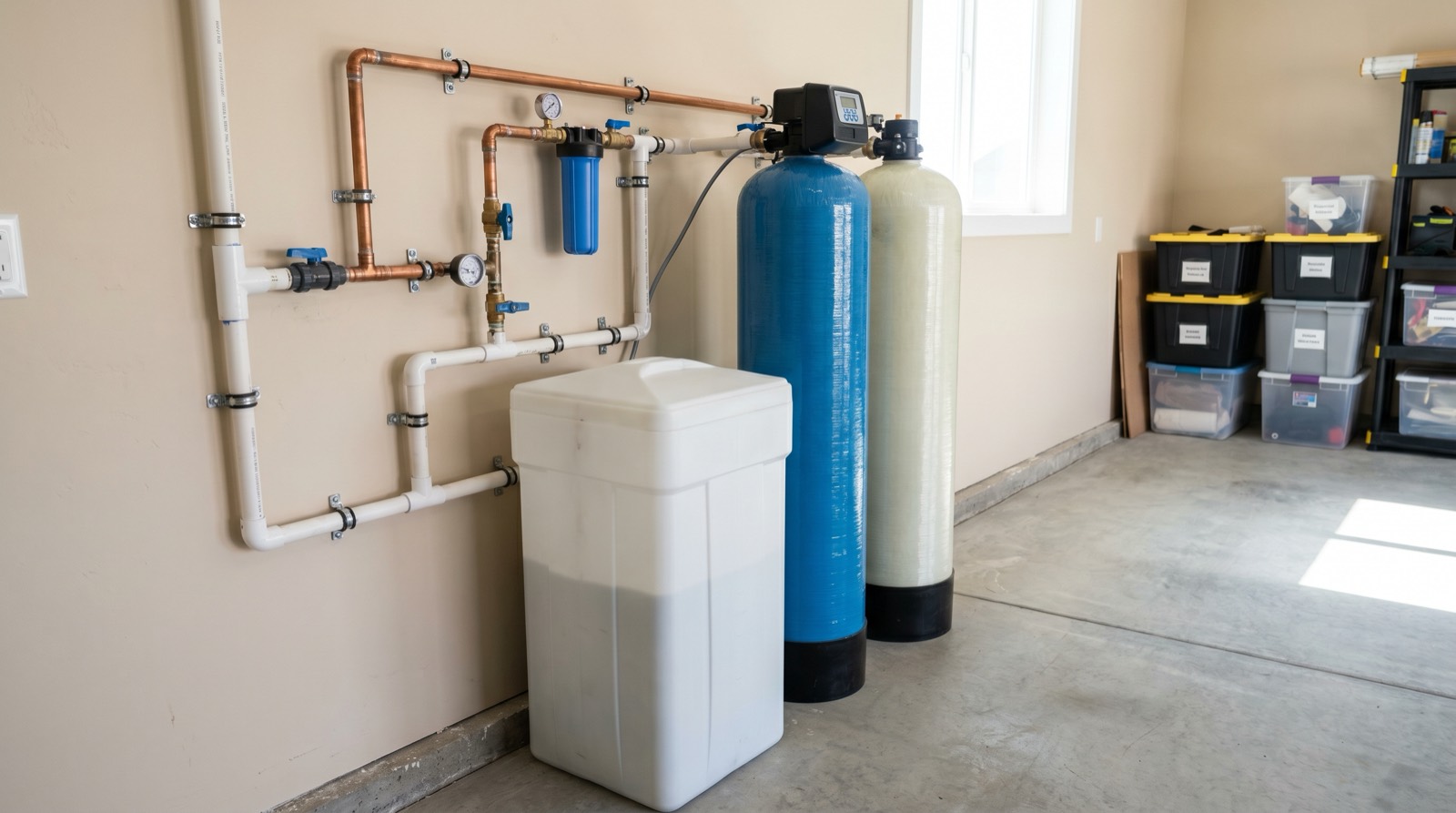
A whole-house setup that combines GAC with fine filtration covers nearly the entire home, the shower, laundry and taps, while supplemental reverse osmosis at the kitchen drinking tap adds an extra layer specifically for direct consumption.
What can you do this week?
Three practical steps any Florida family can take:
- Read your water system's annual report (CCR). The municipal utility is required to publish it, and it lists the contaminants detected in the last twelve months.
- Get an independent test of your water, especially if you are on a well or the CCR does not cover PFAS explicitly. EPA-certified labs offer residential tests for roughly 300 to 600 dollars.
- Evaluate an NSF-certified whole-house filtration solution if the test indicates PFAS or other contaminants above healthy limits.
The honest starting point is knowing what is actually in your water. A free in-home test from a Prevent Water technician reads your water in about twenty minutes and walks you through the result, with no pressure to buy anything.
Frequently asked questions about PFAS in Florida water
What does 4 parts per trillion of PFAS actually mean?
In April 2024 the EPA set the enforceable limit for PFOA and PFOS at 4 parts per trillion (ppt). Four parts per trillion is roughly four drops of a substance in an Olympic-size swimming pool. The EPA chose a level that low because the research links these compounds to health effects even at tiny concentrations, and because there is no clearly safe threshold for the most-studied PFAS.
Does my city water already meet the new PFAS limit?
Not necessarily yet. The EPA gave public water systems until 2029 to come into compliance with the PFAS National Primary Drinking Water Regulation. Until then, a system can be above the new limit and still be operating legally while it upgrades. That gap is exactly why the practical responsibility for what reaches your glass shifted toward the home, through testing and, where needed, certified filtration.
Are PFAS really in Florida water specifically?
Florida is exposed for three reasons: a high density of military bases and airports where PFAS firefighting foams were used for decades, historic chemical and paper industry, and a shallow, karst water table that lets pollutants reach drinking water easily. A 2023 USGS study detected at least one PFAS compound in 45 percent of drinking-water samples taken across the U.S., with points inside Florida among them.
Which water filter actually removes PFAS?
Look for NSF certification specifically for PFAS reduction under NSF/ANSI 53 or NSF/ANSI 58. Three approaches are established: high-quality granular activated carbon for long-chain PFAS, ion-exchange resin for the harder-to-capture short-chain PFAS, and reverse osmosis, which removes nearly all PFAS but is usually a kitchen point-of-use device. A whole-house carbon stage plus an RO tap is a common combination.
How much does it cost to test my water for PFAS?
EPA-certified laboratories offer residential PFAS tests for roughly 300 to 600 dollars, because the analysis is specialized. Before paying for that, start with your utility's free annual Consumer Confidence Report, which lists contaminants detected in the last twelve months. If you are on a private well or the report does not cover PFAS, an independent lab test is the way to confirm what is present.
Sources
- U.S. Environmental Protection Agency. PFAS National Primary Drinking Water Regulation. Final rule, April 10, 2024. epa.gov/sdwa
- U.S. Geological Survey. Drinking Water Exposure to PFAS, a Nationwide Assessment. 2023. usgs.gov
- National Academies of Sciences, Engineering, and Medicine. Guidance on PFAS Exposure, Testing, and Clinical Follow-Up. 2022. nap.nationalacademies.org
- Agency for Toxic Substances and Disease Registry. PFAS Health Effects. CDC. atsdr.cdc.gov
- Florida Department of Environmental Protection. PFAS Dynamic Plan. floridadep.gov
- NSF International. NSF/ANSI 53 Drinking Water Treatment Units, Health Effects. nsf.org
- NSF International. NSF/ANSI 58 Reverse Osmosis Drinking Water Treatment Systems. nsf.org
- World Health Organization. Per- and Polyfluoroalkyl Substances (PFAS) in Drinking Water. Background document for WHO Guidelines. who.int