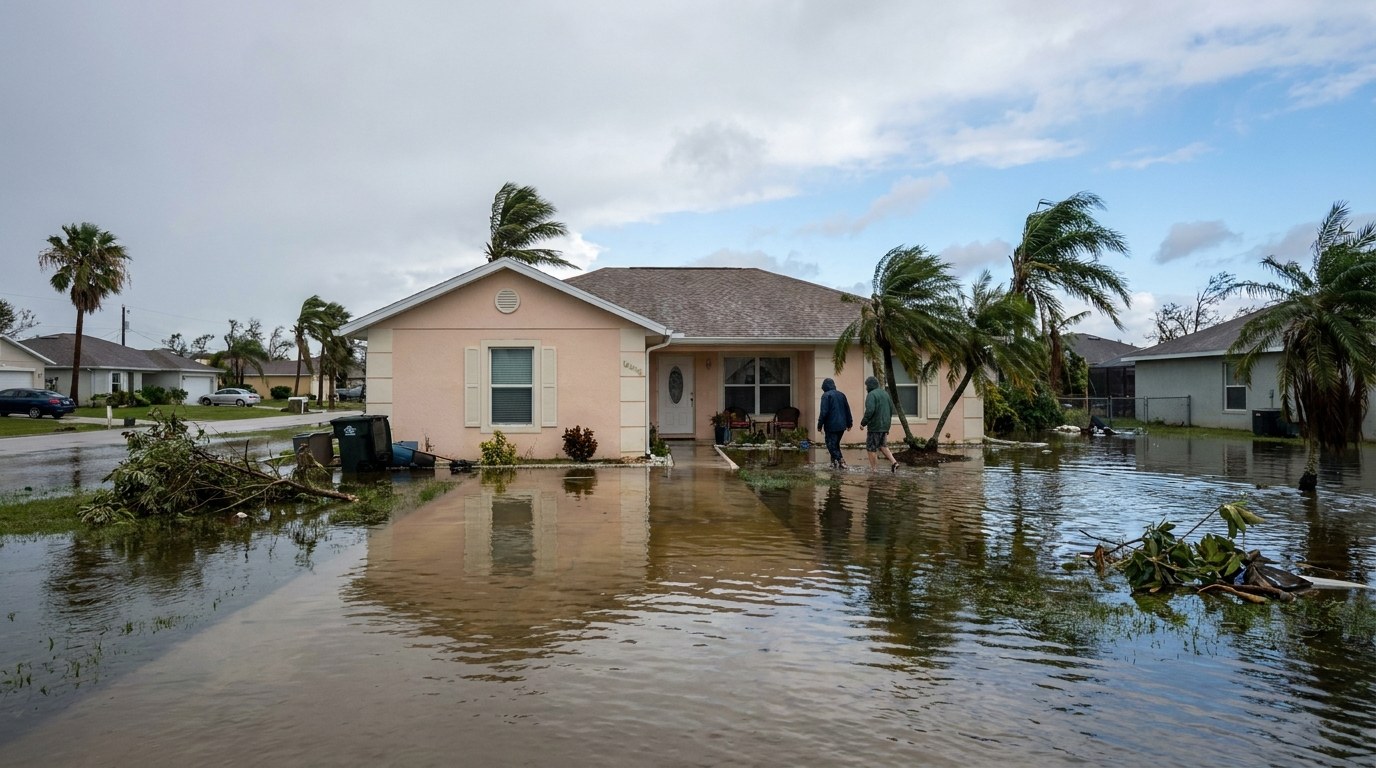
If floodwater reached your wellhead during a hurricane, the CDC says to assume the well is contaminated and not drink the water until it has been disinfected and tested safe. Storm surge and runoff can push bacteria, sewage and chemicals straight into a private well. Until you have an all-clear test, use bottled water or boil at a rolling boil for one minute.
What does a hurricane or flood do to a private well?
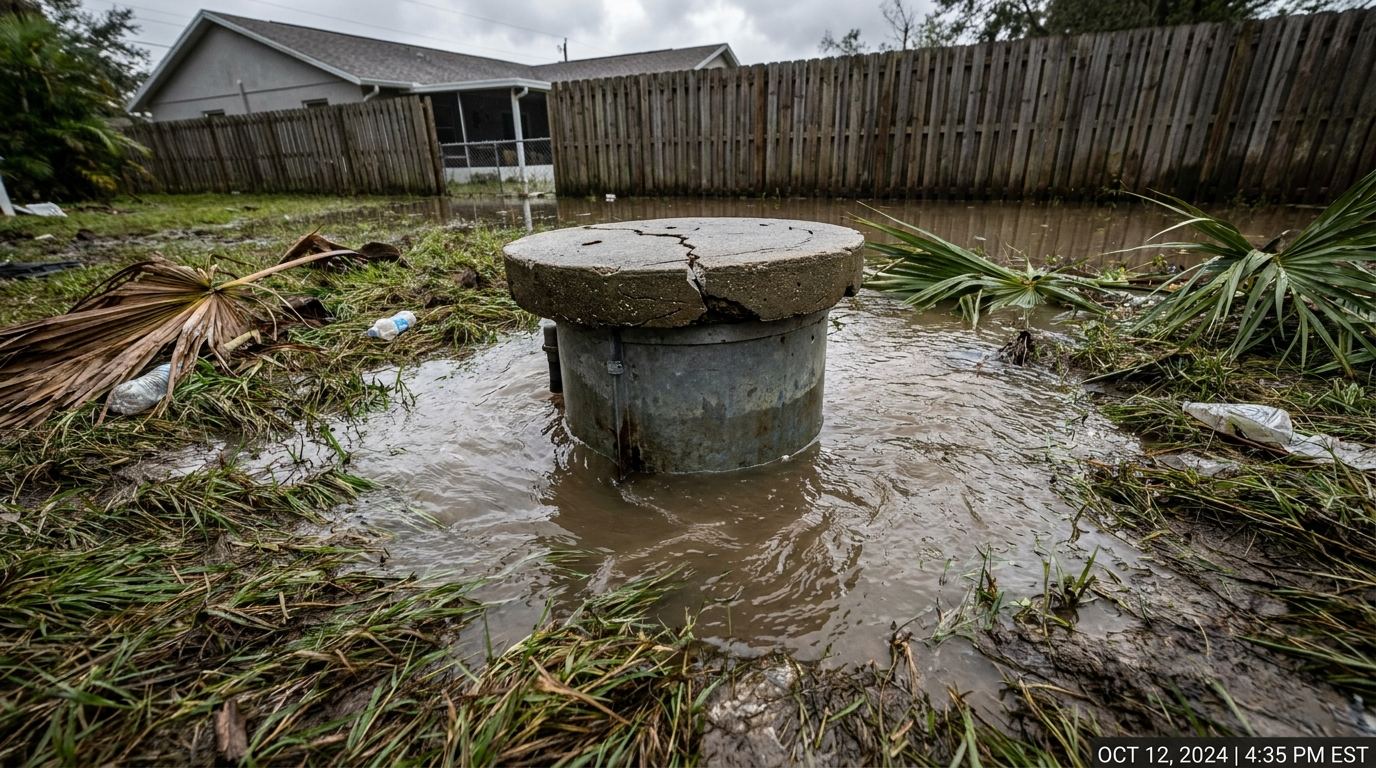
A private well is a sealed straw into the aquifer. The wellhead, the cap, casing and seal at the surface, is what keeps surface water out. When a hurricane drives storm surge or several inches of standing floodwater across your yard, that protective seal can be overtopped or breached, and the dirty water on the surface finds a path down into the well. The CDC is direct about the consequence: a flooded well should be considered contaminated until it is disinfected and tested.
Florida is especially exposed for two reasons covered in our complete well water guide: the limestone aquifer is shallow in much of the state, so the distance between the surface and the water you drink is short, and the same storms that flood yards also knock out power, which stops pumps and lets pressure drop. FEMA and the CDC both note that flooding can carry bacteria, sewage from overwhelmed septic systems, and chemicals like fuel and pesticides into private water supplies.
Is my well water safe to drink after a flood?
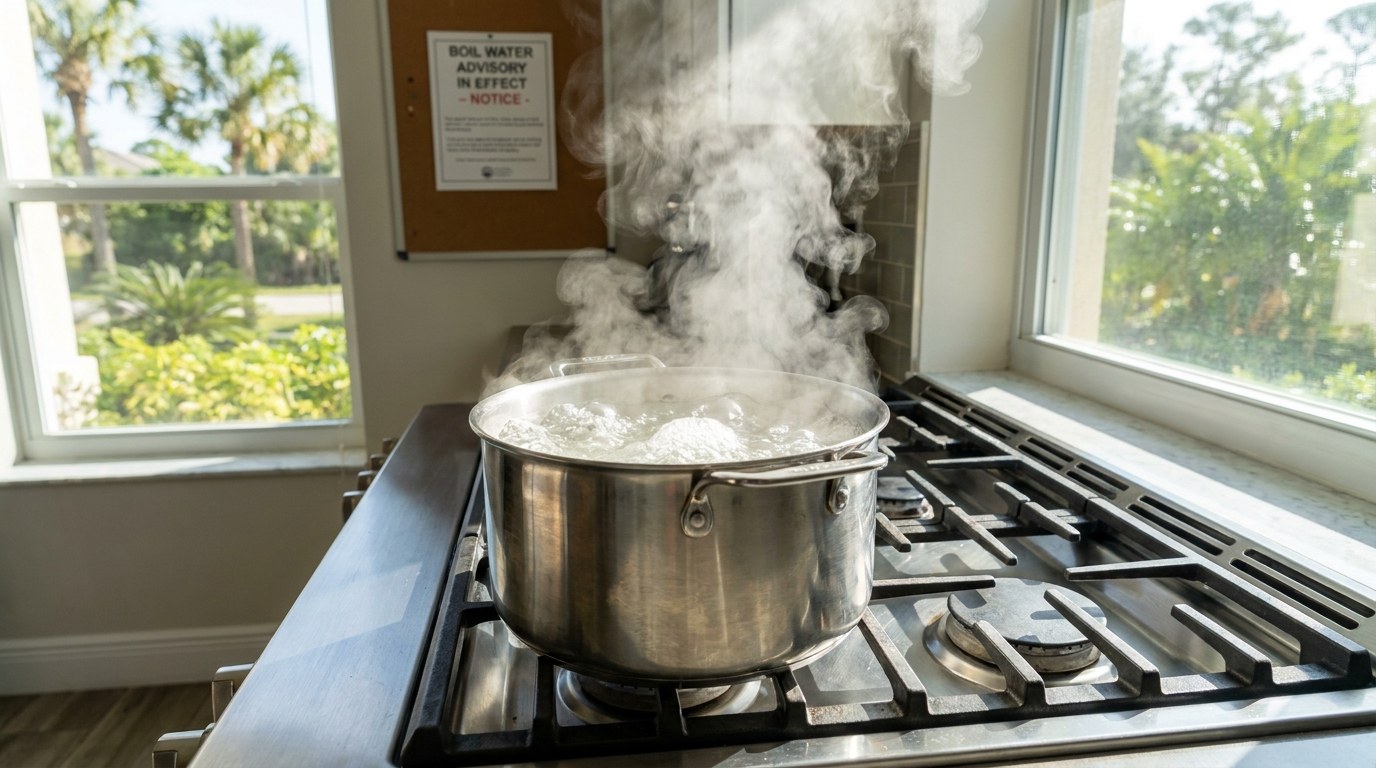
The honest answer is: not until you confirm it. You cannot judge post-flood water by how it looks, smells or tastes, because the most dangerous contaminants, coliform and E. coli bacteria, are invisible and odorless. The CDC advises that after a flood you assume the water is unsafe and switch to bottled water, or boil tap water at a rolling boil for one minute, until the well has been disinfected and a test comes back clean.
What should you do first after the water recedes?
Work in order. Rushing to disinfect a well you have not inspected can waste effort if the cap or casing is damaged:
- Wait for the floodwater to recede and for the surrounding ground to drain. Disinfecting while surface water is still pooling around the wellhead just lets new contamination back in.
- Restore power and check the pump and electrical equipment. The CDC warns not to turn on a pump that was submerged until a qualified electrician or well contractor confirms it is safe, because of shock and damage risk.
- Inspect the wellhead. Look for a cracked or displaced cap, a damaged casing, or debris. A breached seal needs a licensed well contractor before the water can be trusted again.
- Use bottled or boiled water for drinking, cooking, ice and brushing teeth in the meantime, per the boil-water guidance above.
How do you disinfect a flooded well?
The standard method for a contaminated private well is shock chlorination: introducing a strong chlorine solution into the well to kill bacteria throughout the system. The CDC, EPA and UF/IFAS Extension all describe the same general process, and the exact chlorine amount depends on your well depth and diameter:
| Step | What you do | Why it matters |
|---|---|---|
| 1. Prepare | Inspect the wellhead, clean the area, and calculate chlorine dose for your well dimensions | An accurate dose ensures disinfection reaches the whole system |
| 2. Add chlorine | Pour the unscented household bleach solution into the well per extension guidance | Chlorine kills bacteria in the well, casing and aquifer near the screen |
| 3. Circulate | Run water back into the well and open each tap until you smell chlorine, then stop | Spreads disinfectant through pipes, the water heater and fixtures |
| 4. Hold | Let the chlorinated water sit in the system, typically 12 to 24 hours | Contact time is what actually kills the microorganisms |
| 5. Flush | Run the water until the chlorine smell is gone, avoiding septic overload | Clears the heavy chlorine before you sample and use the water |
Follow the dosing tables and detailed steps published by Florida DOH and UF/IFAS for your specific well, since the right chlorine quantity scales with well depth and casing diameter. If the well construction is unclear, access is difficult, or contamination keeps returning, a licensed well contractor is the safer route.
When should you test, and when is it safe again?
Disinfection is not the finish line. The well is only proven safe when a test confirms it, and the sequence the CDC recommends is clear:
- Flush out the chlorine first. Testing while chlorine is still in the lines can mask a problem, so run the water until the chlorine smell is gone before you collect a sample.
- Test for total coliform bacteria. This is the core post-flood test. A clean total coliform result is the signal that disinfection worked. Our guide on what a positive coliform test means explains how to read the result.
- Retest if it comes back positive. A persistent positive after shock chlorination points to an ongoing pathway, a damaged casing, a nearby septic failure, or surface intrusion, that needs a professional, not another round of bleach.
- Keep using safe water until you have the clean result in hand. Do not return to untreated tap water on a hunch.
Hurricanes are also a reminder of why a yearly test schedule matters even in calm seasons, which we cover in how often you should test well water in Florida. If a storm has you rethinking your whole water setup, the honest first step is knowing exactly what is in your water. Our well water treatment page explains how a free in-home test reads the picture in about twenty minutes, once your water is back to a safe baseline.
Frequently asked questions about wells after a flood
Can I drink my well water right after a hurricane?
Not until you confirm it is safe. The CDC advises that if your well was flooded or you lost power, you should assume the water is unsafe and either use bottled water or boil tap water at a rolling boil for one minute before drinking, cooking or brushing teeth. Floodwater can carry bacteria, sewage and chemicals into a well, and you cannot see or smell most of it. Disinfect the well, then test before you trust it.
How long should I boil water during a boil-water advisory?
The CDC and Florida Department of Health say to bring water to a rolling boil and keep it boiling for at least one minute, then let it cool before use. At elevations above 6,500 feet the recommendation is three minutes, which does not apply in Florida. Boiling kills bacteria, viruses and parasites, but it does not remove chemical contamination, so boiling is a stopgap until the well is disinfected and tested.
Will boiling water remove chemicals or fuel that got into my well?
No. Boiling kills microorganisms but concentrates rather than removes chemicals such as fuel, pesticides or industrial runoff. The EPA and CDC warn that if you suspect chemical contamination from flooding, do not use the water for drinking or cooking and contact your local health department. A laboratory test is the only way to confirm what is present.
Do I need a professional to shock chlorinate my well?
Many homeowners can perform shock chlorination by following CDC and university extension instructions, but if your well is hard to access, you are unsure of the construction, or contamination persists after disinfection, a licensed well contractor is the safer choice. In Florida, the Department of Health and UF/IFAS publish step-by-step guidance, and damaged well caps or casings should be inspected by a professional before you rely on the water.
My well was not underwater. Do I still need to test it?
If floodwater did not reach the wellhead and you kept power, the risk is lower, but a season with heavy rain and rising water tables is still a good reason to test. The CDC recommends testing any private well that may have been affected by flooding. When in doubt, a total coliform and bacteria test is inexpensive insurance before you assume the water is fine.
Sources
- Centers for Disease Control and Prevention. Wells: What to Do After a Flood, and Private Well disinfection guidance. cdc.gov
- Centers for Disease Control and Prevention. Making Water Safe in an Emergency (boil water guidance, rolling boil one minute). cdc.gov
- U.S. Environmental Protection Agency. What to Do After the Flood: private wells and water safety. epa.gov
- Florida Department of Health. Disinfecting Your Well Water and Private Well Testing program. floridahealth.gov
- University of Florida IFAS Extension. EDIS publications on shock chlorination and emergency disinfection of private wells. edis.ifas.ufl.edu
- Federal Emergency Management Agency. Flood recovery guidance for private water supplies. ready.gov