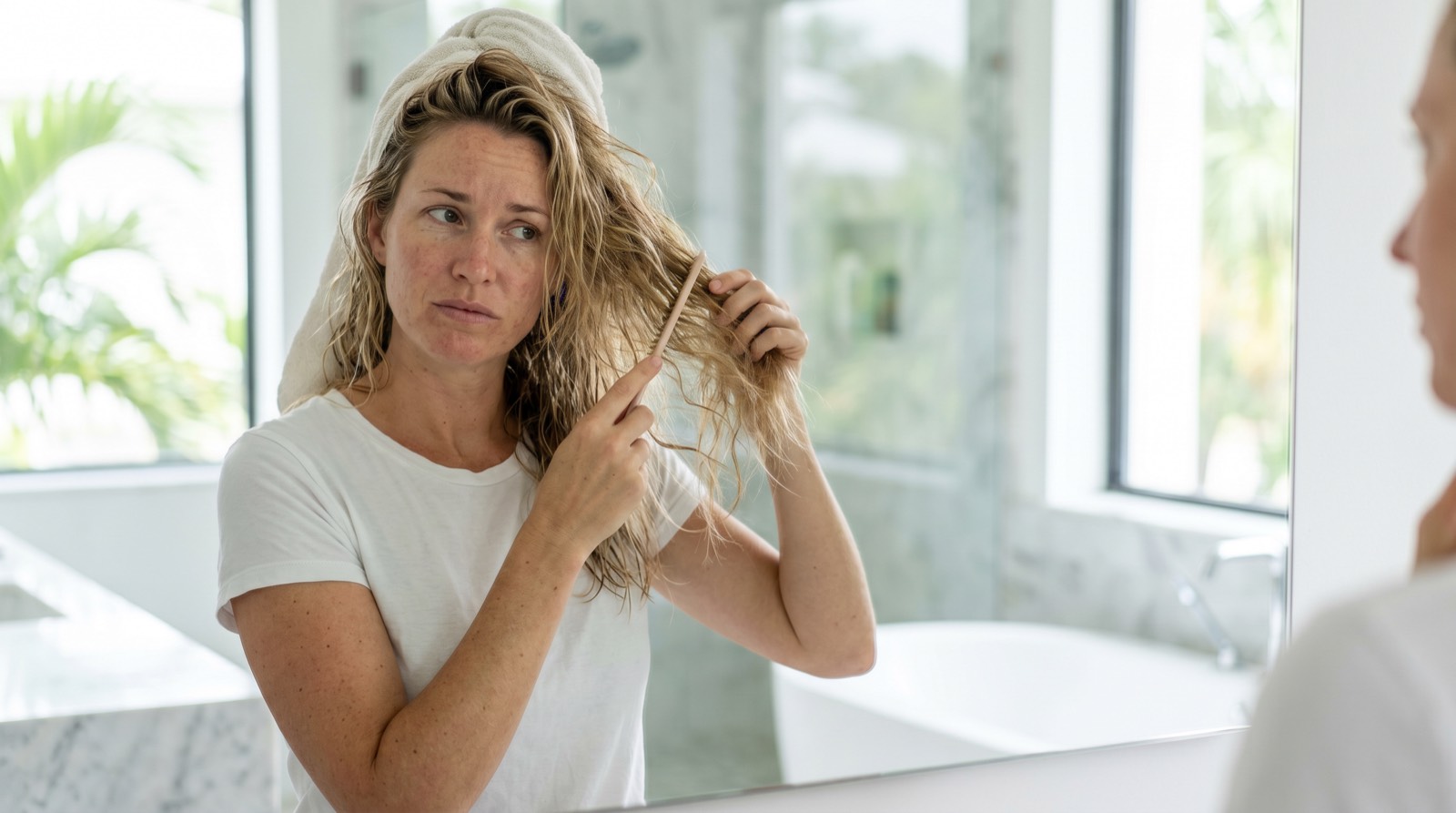
Hard water does not cause or cure eczema, dry skin or hair loss. What the research actually shows is a correlation: people in hard-water areas tend to report drier, filmier skin and coarser hair, and studies link higher water hardness to worse atopic eczema, especially in infants. The mechanism is simple, minerals react with soap to leave a residue the skin barrier struggles to handle.
Does hard water affect skin and hair?
Yes, but in a specific and limited way. Hard water is water high in dissolved calcium and magnesium, classified by the U.S. Geological Survey as very hard above 180 mg/L as calcium carbonate, a band much of Florida sits in because the water comes from the limestone Floridan aquifer. We cover the geology in our complete Florida hard water guide. Those minerals do not poison you. What they do is interact with soap and shampoo to form an insoluble film, the same soap scum you see on a shower wall, and that film is the root of most skin and hair complaints.
What does hard water do to your skin?
When hard water mixes with soap, the calcium and magnesium neutralize the surfactants and leave a residue clinging to the skin. People commonly describe the result as skin that feels tight, dry, filmy or itchy after washing, even with gentle products. Research also suggests hard water may slightly raise the skin's surface pH and interfere with the lipid barrier that holds moisture in. None of this is dangerous, but for people with already-sensitive or barrier-impaired skin, it is a daily irritant rather than a one-off.
Can hard water make eczema worse?
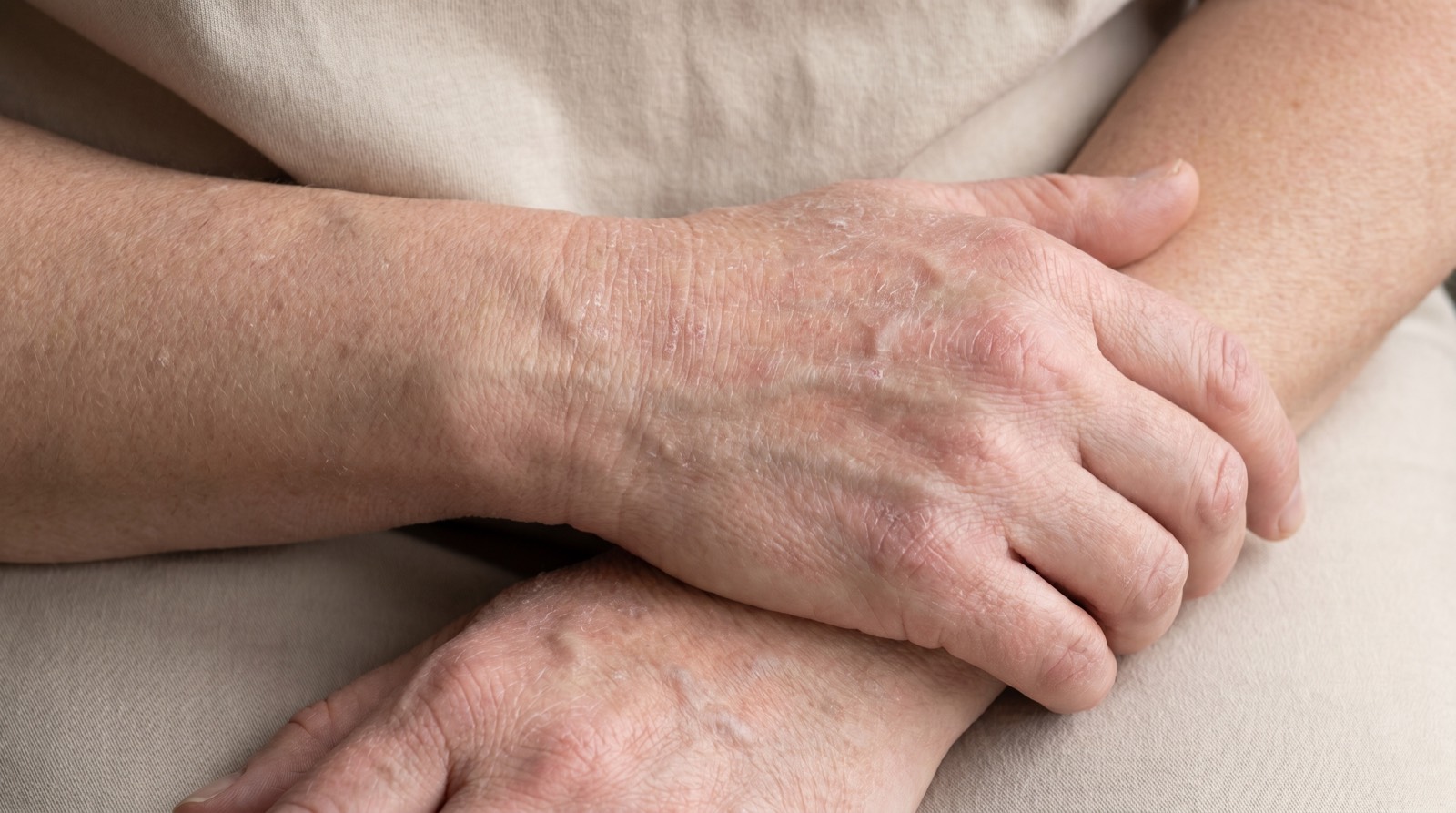
This is where the strongest evidence sits, and where compliance matters. Eczema, properly atopic dermatitis, is a chronic condition driven by genetics and a weakened skin barrier. Hard water does not cause it and does not cure it. But a 2016 study published in the Journal of Investigative Dermatology found that infants living in hard-water areas had a measurably higher rate of eczema, and the effect grew with rising chlorine levels too. The leading explanation is that the soap residue and surface-pH shift further stress an already-fragile barrier.
What does hard water do to your hair?
The same soap-film mechanism applies to hair. Mineral residue coats the hair shaft so that strands feel coarse, dull and harder to detangle, lather rinses poorly, and color-treated hair can fade faster. A small 2013 study in the International Journal of Dermatology observed reduced tensile strength and a thinner appearance in hair samples after repeated hard-water exposure, which is a cosmetic and structural effect at the strand, not medical hair loss. Here is how the complaints line up:
| What you notice | What is actually happening |
|---|---|
| Skin feels tight, dry or filmy after washing | Soap residue from calcium and magnesium left on skin |
| Eczema flares feel worse | Residue and pH shift stress an already-impaired barrier (correlation) |
| Hair feels coarse, dull, hard to manage | Mineral film coating the hair shaft, poor rinse-off |
| Color fades fast, more breakage | Reduced strand strength from repeated hard-water exposure |
What actually reduces the effect?
The honest answer is to target the cause, the dissolved minerals, while keeping expectations realistic:
- Soften the water. A salt-based ion-exchange softener (certified to NSF/ANSI 44) removes the hardness minerals so soap rinses clean and leaves little film. A salt-free conditioner is a lower-maintenance alternative. This is the only fix that works at every tap, not just one.
- Filter chlorine at the shower. Hardness rarely travels alone in Florida water. Chlorine compounds the drying effect, which is why pairing softening with chlorine reduction often feels better, as we explain in chlorine and chloramine in the shower.
- Keep up good skin and hair care. Softening reduces irritation, but it does not replace moisturizer, gentle cleansers or medical care for eczema. Treat it as comfort, not a cure.
The starting point is knowing your numbers. A whole-house approach makes sense once you confirm your water is genuinely hard, the same logic behind whole-house treatment and our well water systems. A free in-home test measures your real hardness in about twenty minutes, with no pressure to buy.
Frequently asked questions about hard water, skin and hair
Does hard water cause eczema?
No. Eczema (atopic dermatitis) is a chronic condition driven by genetics and an impaired skin barrier, not by water. What research shows is a correlation between higher domestic water hardness and worse eczema severity, especially in infants. A 2016 study in the Journal of Investigative Dermatology found that babies in hard-water areas had a measurably higher rate of eczema. So hard water is best understood as an aggravating factor for sensitive or eczema-prone skin, not a cause or a cure.
Will a water softener cure my eczema or dry skin?
No, and you should be cautious of anyone who promises that. A water softener removes the calcium and magnesium that make water hard, which can reduce the soap film left on skin and may make symptoms more manageable for some people. But a 2018 randomized controlled trial (the SWET trial) found that installing a softener did not produce a statistically significant improvement in childhood eczema on its own. Softening can help comfort and reduce irritation, but it is not a medical treatment. Talk to a dermatologist for skin conditions.
Why does my hair feel dry and rough after showering in hard water?
Hard water minerals react with shampoo and soap to form a film that does not rinse away cleanly, coating the hair shaft. That residue can leave hair feeling coarse, dull and harder to manage, and it can make color fade faster. A small 2013 study in the International Journal of Dermatology observed reduced tensile strength and thinning of hair samples after repeated exposure to hard water. It is a cosmetic and feel issue, not hair loss in the medical sense.
Does hard water cause hair loss or baldness?
There is no good evidence that hard water causes pattern baldness or true hair loss. Baldness is driven by genetics and hormones. What hard water can do is make hair feel weaker, rougher and more prone to breakage at the strand, which people sometimes mistake for shedding. If you are losing hair, that is a reason to see a doctor, not to blame your water.
How do I know if hard water is behind my skin or hair complaints?
The clue is the pattern: dry, filmy skin and coarse hair that show up across the whole household, plus white scale on faucets, spots on glassware and soap that will not lather. Those are the everyday signatures of hard water. A free in-home test measures your actual hardness in mg/L, so you stop guessing. If your water is in the USGS very hard band, softening is a reasonable comfort step, alongside, not instead of, good skin care.
Sources
- U.S. Geological Survey. Water Hardness and Alkalinity, Water Science School. usgs.gov
- Perkin, M.R. et al. Association between domestic water hardness, chlorine, and atopic dermatitis in early infancy. Journal of Investigative Dermatology, 2016. jidonline.org
- Thomas, K.S. et al. A multicentre randomised controlled trial of ion-exchange water softeners for the treatment of eczema in children (SWET). PLOS Medicine, 2011 / 2018 analyses. plosmedicine.org
- Srinivasan, G. & Srinivas, C.R. Hair breakage index: an in vitro study on the effect of hard water on hair. International Journal of Dermatology, 2013. ijd (Wiley)
- National Eczema Association. Eczema causes and triggers. nationaleczema.org
- NSF International. NSF/ANSI 44 Residential Cation Exchange Water Softeners. nsf.org