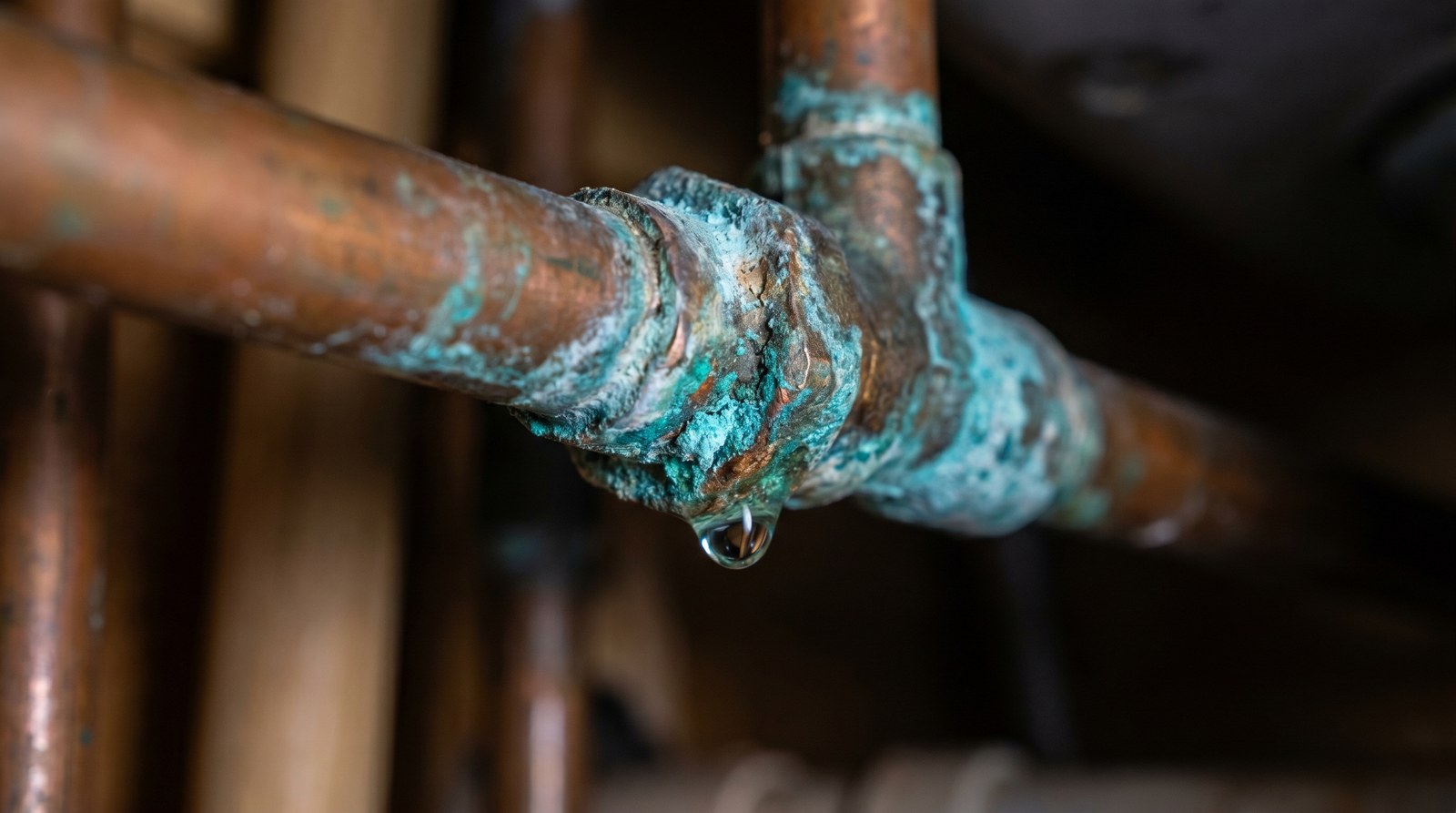
Acidic well water sits below the EPA secondary pH range of 6.5 to 8.5, and it slowly corrodes your plumbing. The clearest signs are blue-green stains from dissolving copper pipes, pinhole leaks, and a metallic taste. It is rarely an immediate health threat on its own, but the metals it pulls into your water can be, which is why it is worth fixing.
What does acidic well water actually mean?
The pH scale runs from 0 to 14, with 7 being neutral. Below 7 is acidic, above 7 is basic. The EPA's secondary drinking water standard recommends keeping water between 6.5 and 8.5, a range set largely to avoid the corrosion and staining that fall outside it. When well water reads below 6.5, it is hungry for minerals and metals, and the most available source of those is your own plumbing.
This is the key thing to understand: acidic water is a problem mostly because of what it does on the way to your glass. It dissolves copper from pipes, leaches metals from solder and brass fittings, and eats away at the inside of every metal component it touches. The acidity you can sometimes taste as a metallic tang is the same chemistry quietly shortening the life of your plumbing.
Why does some Florida well water run acidic?
Florida is famous for hard, alkaline water from the limestone Floridan aquifer, so acidic wells can seem surprising. But the state's geology is not uniform. Several conditions push individual wells toward low pH:
- Shallow surficial aquifers. Many Florida homes draw from shallow sand-and-gravel aquifers above the limestone. These can be naturally acidic, fed by rainfall that picks up carbon dioxide and organic acids from soil and decaying vegetation.
- Rainwater and dissolved CO2. Rain is naturally slightly acidic. Where it reaches a well without passing through enough buffering limestone, the water stays acidic.
- Organic acids from vegetation. The same tannins that tint some Florida well water tea-brown also lower its pH, common near wetlands and decomposing plant matter.
The result is a patchwork: one neighborhood can have hard, alkaline limestone water while a nearby home on a shallow well fights corrosion. The broader picture of what Florida geology puts in your water is mapped in our complete Florida well water guide.
What are the warning signs of low pH water?
Acidic water tends to announce itself through your plumbing before any test confirms it. Watch for this cluster:
| Sign | What is happening |
|---|---|
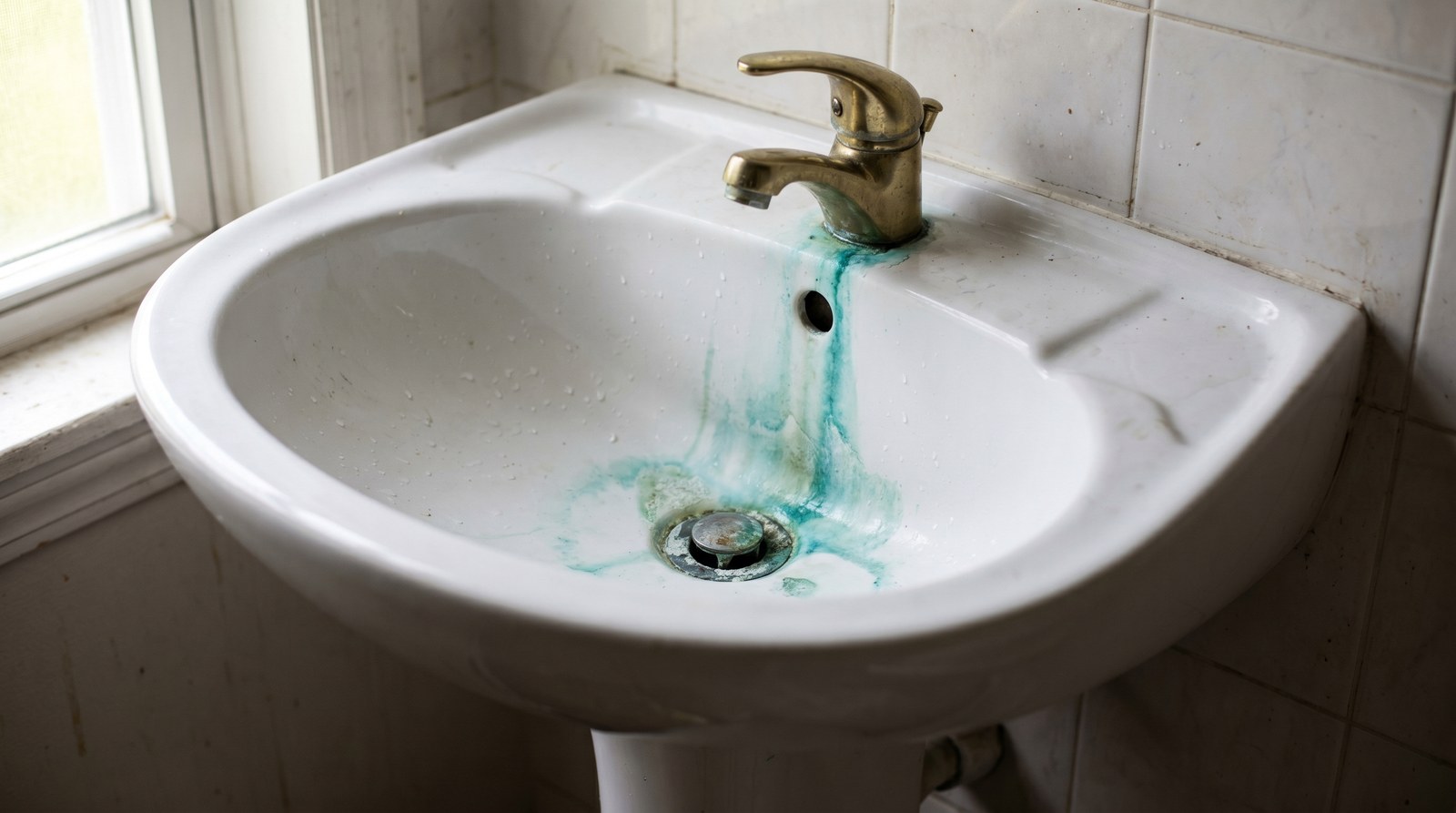
| Blue-green stains on sinks, tubs and fixtures | Copper from your pipes is dissolving and redepositing on porcelain |
| Pinhole leaks in copper pipes | Corrosion has eaten through the pipe wall from the inside |
| Metallic or sour taste | Dissolved metals, often copper, are in the water |
| Frequent fixture and water heater failures | Corrosive water is shortening the life of brass, valves and tanks |
| Faint blue tint in a white tub of standing water | Elevated copper concentration from active corrosion |
Is acidic well water dangerous to your health?
The acidity itself, at the levels found in homes, is not the main health concern, people drink mildly acidic beverages all the time. The concern is the metals. The EPA is explicit that corrosive water can leach metals such as copper and lead from plumbing into drinking water. High copper intake can cause gastrointestinal upset, and lead, which can come from older solder and brass fixtures, has no safe level, especially for children and pregnant women.
That is why the responsible response to suspected acidic water is a test that looks at pH together with copper and lead at the tap, not just the pH number alone. The broader question of whether untreated well water is safe to drink is covered in is Florida well water safe to drink without treatment, and the full testing schedule is in how often to test well water in Florida.
How do you raise the pH of well water?
Fixing acidic water means neutralizing it before it reaches your plumbing. The two common point-of-entry approaches:
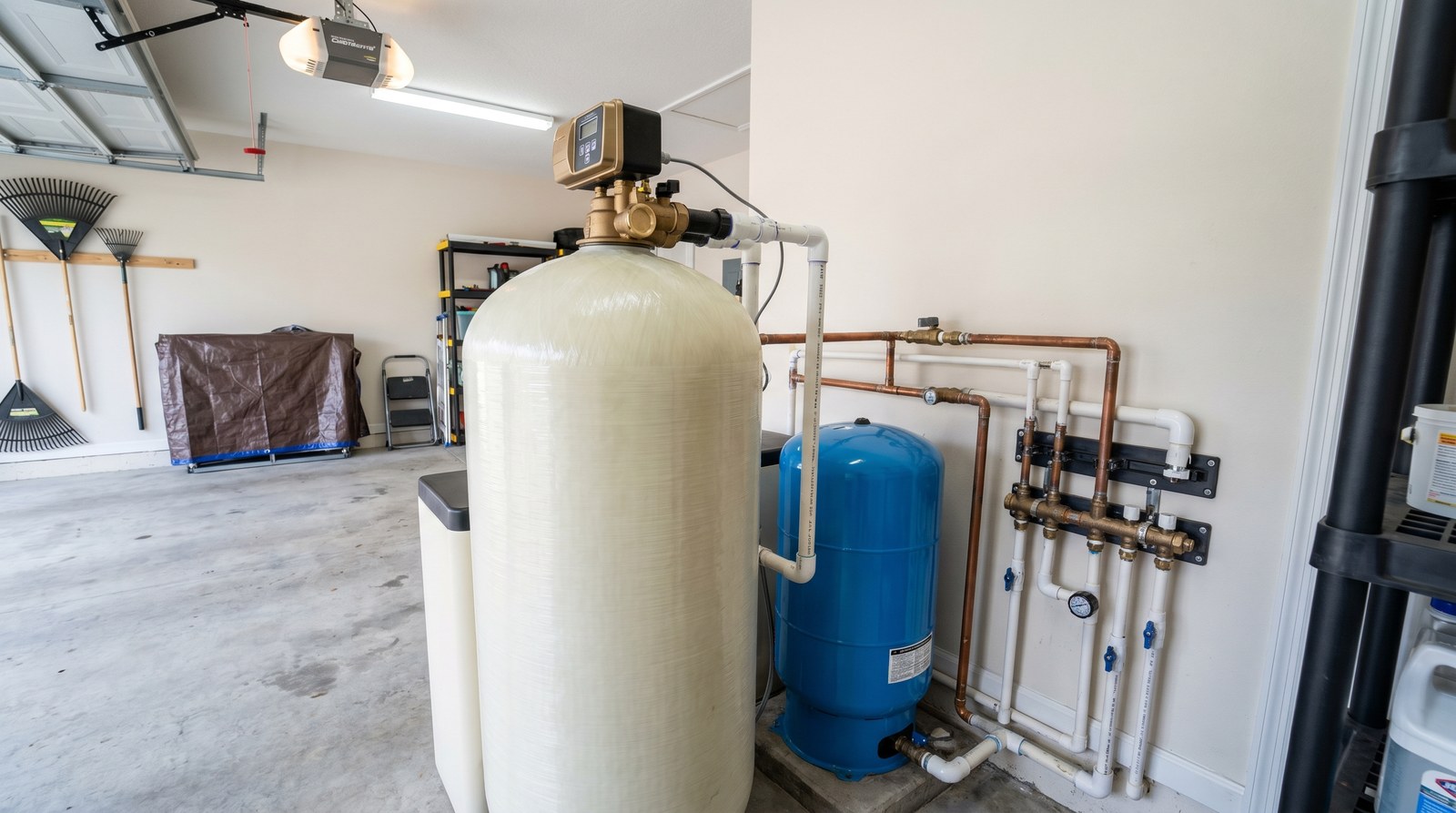
- Calcite or magnesium-oxide neutralizer tank. The most common residential fix. Acidic water flows through a tank of crushed calcite (calcium carbonate); the mineral slowly dissolves, raising pH toward neutral and adding a little hardness in the process. The media is replenished as it is consumed. For very low pH, a calcite and magnesium-oxide blend reaches a higher pH.
- Soda ash or potassium hydroxide injection. A small metering pump doses a measured amount of neutralizing solution into the water line. This handles very aggressive, very low-pH water and does not add hardness, but it requires more monitoring and refilling of the solution tank.
Which one fits depends on how low the pH is, the well's flow rate, and what else the water carries, since acidic Florida wells often arrive with sediment or iron bacteria too. The sizing is not guesswork, it follows the actual pH reading and water profile.
The honest starting point is the number. Our well water treatment page shows how the free in-home test reads your pH on the spot, so you know whether your water is corrosive before you spend a dollar on treatment.
Frequently asked questions about acidic well water
What pH is too low for well water?
The EPA's secondary standard recommends a pH between 6.5 and 8.5. Water below 6.5 is considered acidic and increasingly corrosive to plumbing. Many corrosive Florida wells read in the 5.5 to 6.4 range. The number alone does not capture everything, water can be corrosive even near neutral pH, which is why a full test looks at pH alongside other indicators.
Can acidic water cause copper to leach into my drinking water?
Yes. The EPA notes that corrosive, low-pH water can dissolve metals from pipes, including copper and, in older homes, lead from solder and fixtures. That is the real health concern with acidic water: not the acidity itself, but the metals it pulls into the water. Testing for copper and lead at the tap, alongside pH, is the responsible step.
Are the blue-green stains in my sink dangerous?
The stains themselves are copper deposits and are not directly harmful to touch. But they are a visible warning that your acidic water is actively dissolving your copper pipes, which means copper is entering the water and your plumbing is wearing from the inside. The stain is the symptom; the corrosion is the problem to address.
How does an acid neutralizer work?
A calcite or magnesium-oxide neutralizer tank sits at your point of entry. As acidic water passes through the mineral bed, it slowly dissolves the calcite, which raises the pH toward neutral and reduces corrosivity. The media is consumed over time and gets topped off periodically. For very low pH, a magnesium-oxide blend or a soda ash injection system is sometimes used instead.
Will acidic water damage my water heater and appliances?
Over time, yes. Corrosive water attacks copper lines, brass fittings, the anode rod and tank of a water heater, and the valves inside dishwashers and washing machines. Florida DOH and UF/IFAS both list corrosion of plumbing and fixtures as a primary consequence of low-pH well water, which is why neutralizing it protects the whole house, not just the taste.
Sources
- U.S. Environmental Protection Agency. Secondary Drinking Water Standards (pH 6.5 to 8.5) and corrosion / metal leaching guidance. epa.gov
- U.S. Geological Survey. pH and water: acidity, corrosivity and groundwater chemistry. usgs.gov
- Florida Department of Health. Private Well Testing: pH, corrosion and water quality guidance. floridahealth.gov
- University of Florida IFAS Extension. EDIS publications on pH, corrosive water and neutralization of private wells. edis.ifas.ufl.edu
- Centers for Disease Control and Prevention. Private Wells: water quality and contaminants including metals. cdc.gov