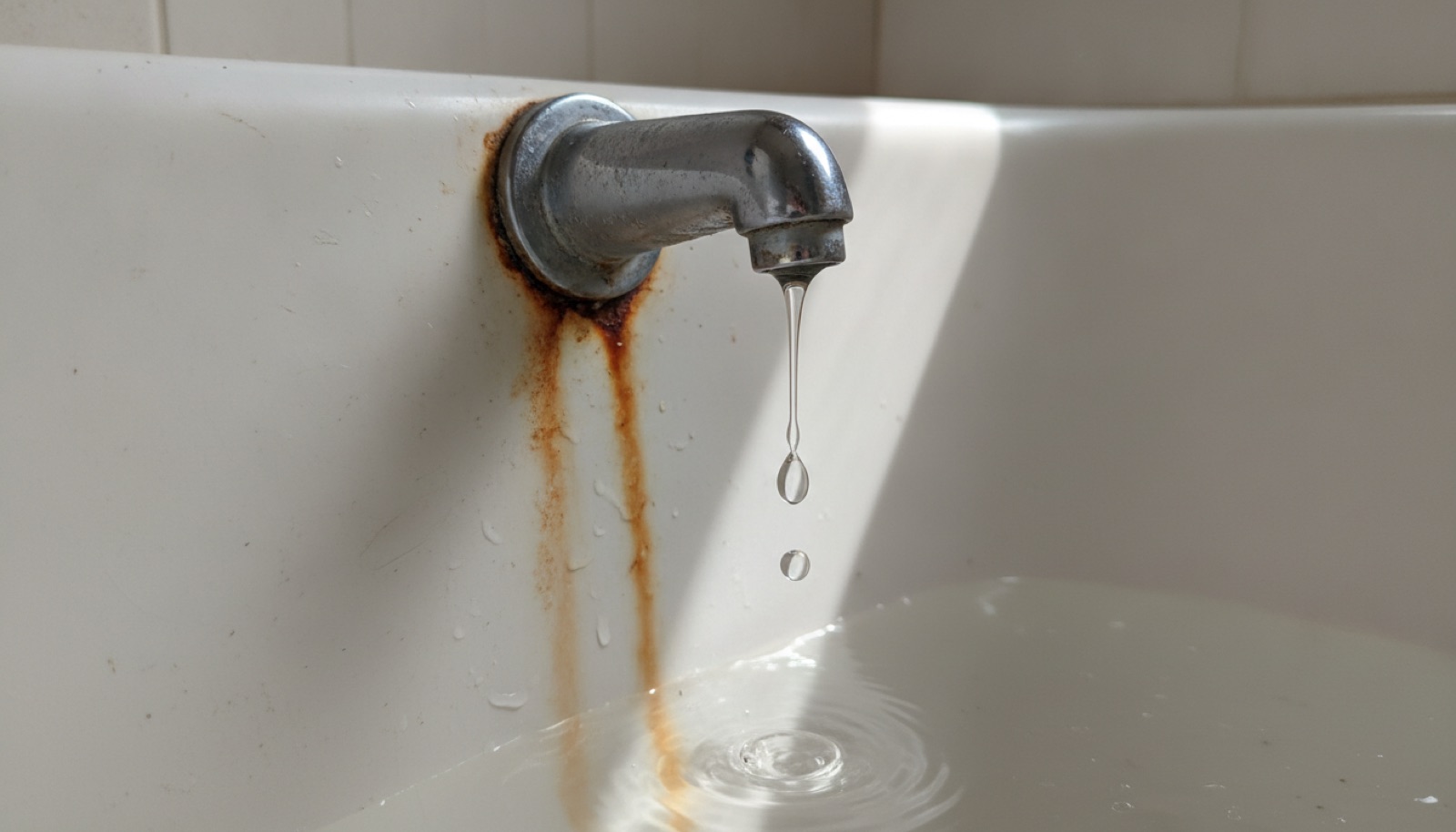
Orange and brown stains on tubs, sinks, toilets and laundry are caused by iron in your well water. It arrives in three forms, dissolved ferrous iron, particulate ferric iron, and iron bacteria, and staining begins at just 0.3 mg/L, the EPA's secondary limit. Identify which form you have and the stains can be stopped permanently.
What causes orange and brown stains from well water?
Iron is one of the most common elements in the Earth's crust, and the U.S. Geological Survey lists iron and manganese among the most frequent nuisance constituents in U.S. groundwater. As rain percolates through soil and rock into the aquifer, it dissolves iron along the way, and your well pump delivers it to the house. The moment that iron meets oxygen, it oxidizes into rust, the same chemistry that reddens an old nail, except it happens on your porcelain, grout, and white laundry.
The EPA does not regulate iron as a health contaminant. Instead it sets a secondary (aesthetic) standard of 0.3 mg/L, the threshold where staining, metallic taste and discoloration begin. Manganese, iron's frequent companion, has a secondary standard of 0.05 mg/L and causes brown-to-black stains. Many Florida wells exceed both numbers, which is why stained fixtures are one of the most common complaints among well owners in the state.
Stain color is a useful first clue:
| Stain color | Likely cause |
|---|---|
| Orange / rust red | Iron (ferrous or ferric) |
| Brown to black | Manganese, or iron + manganese together |
| Yellow / tea tint that resists filtering | Tannins or organically bound iron |
| Blue-green | Copper corrosion, usually from acidic (low pH) water |
Which type of iron is in my water?
Treatment fails when it targets the wrong form of iron, so this is the diagnostic that matters most. Run a glass of cold water and watch it for 30 minutes:
- Ferrous iron (Fe²⁺), "clear-water iron". The glass starts perfectly clear, then turns cloudy orange as air oxidizes the dissolved iron. This is the most common form in deeper Florida wells, where oxygen is scarce underground.
- Ferric iron (Fe³⁺), "red-water iron". The water comes out of the tap already tinted orange or rusty, the iron has oxidized before reaching you, often in the well or piping.
- Iron bacteria (IRB). Harmless-to-health microorganisms such as Gallionella and Leptothrix that feed on dissolved iron and build reddish-brown slime in toilet tanks, an oily-looking sheen on standing water, and a swampy odor.
Are iron stains a health risk?
For drinking, no, iron at these concentrations is not considered a health hazard, which is precisely why the EPA classifies it under secondary standards rather than health-based maximums. The CDC's private well guidance treats iron as an aesthetic and operational problem. The genuine costs are financial and practical:
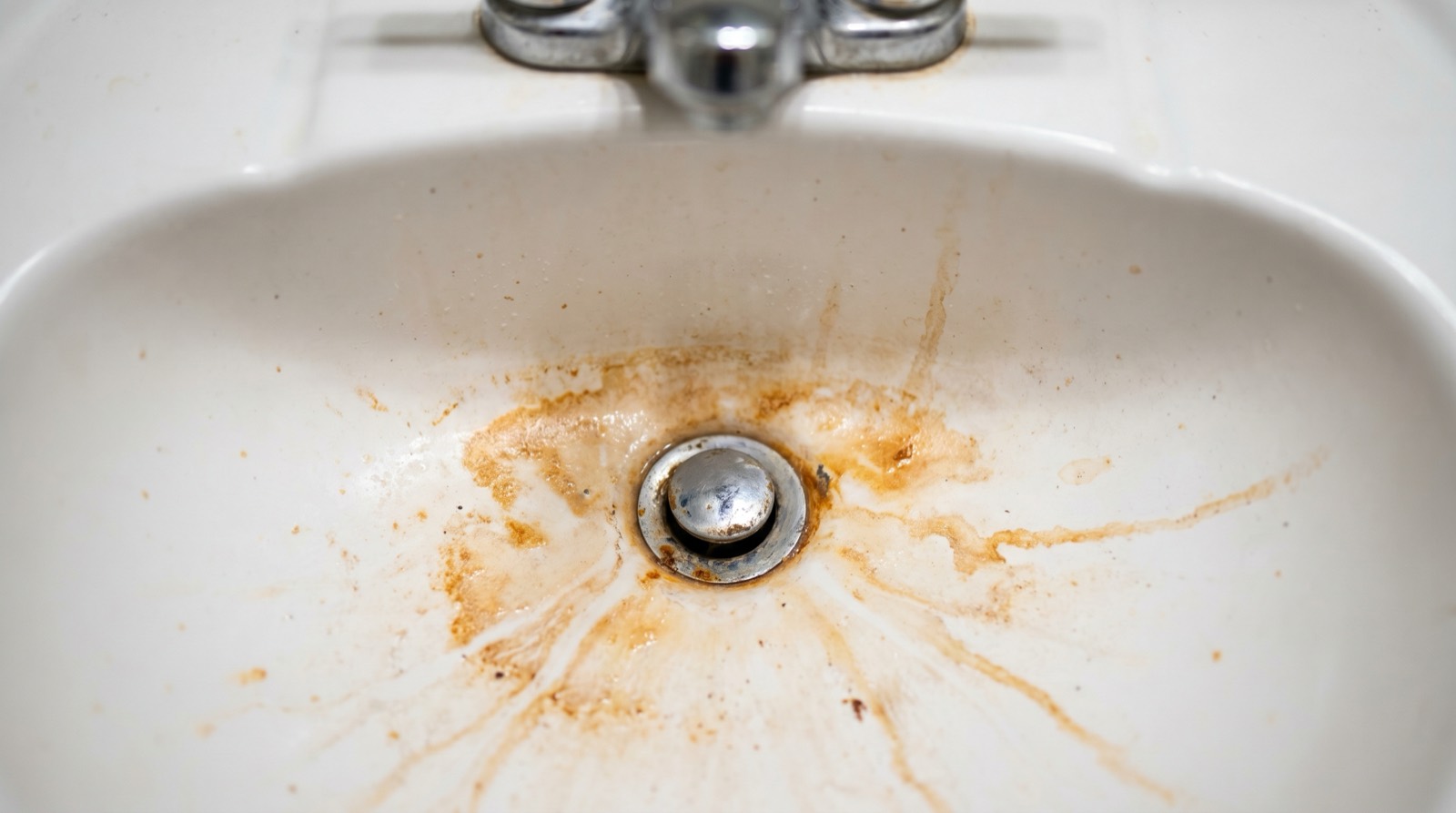
- Permanently stained porcelain, grout, and fiberglass that returns days after scrubbing.
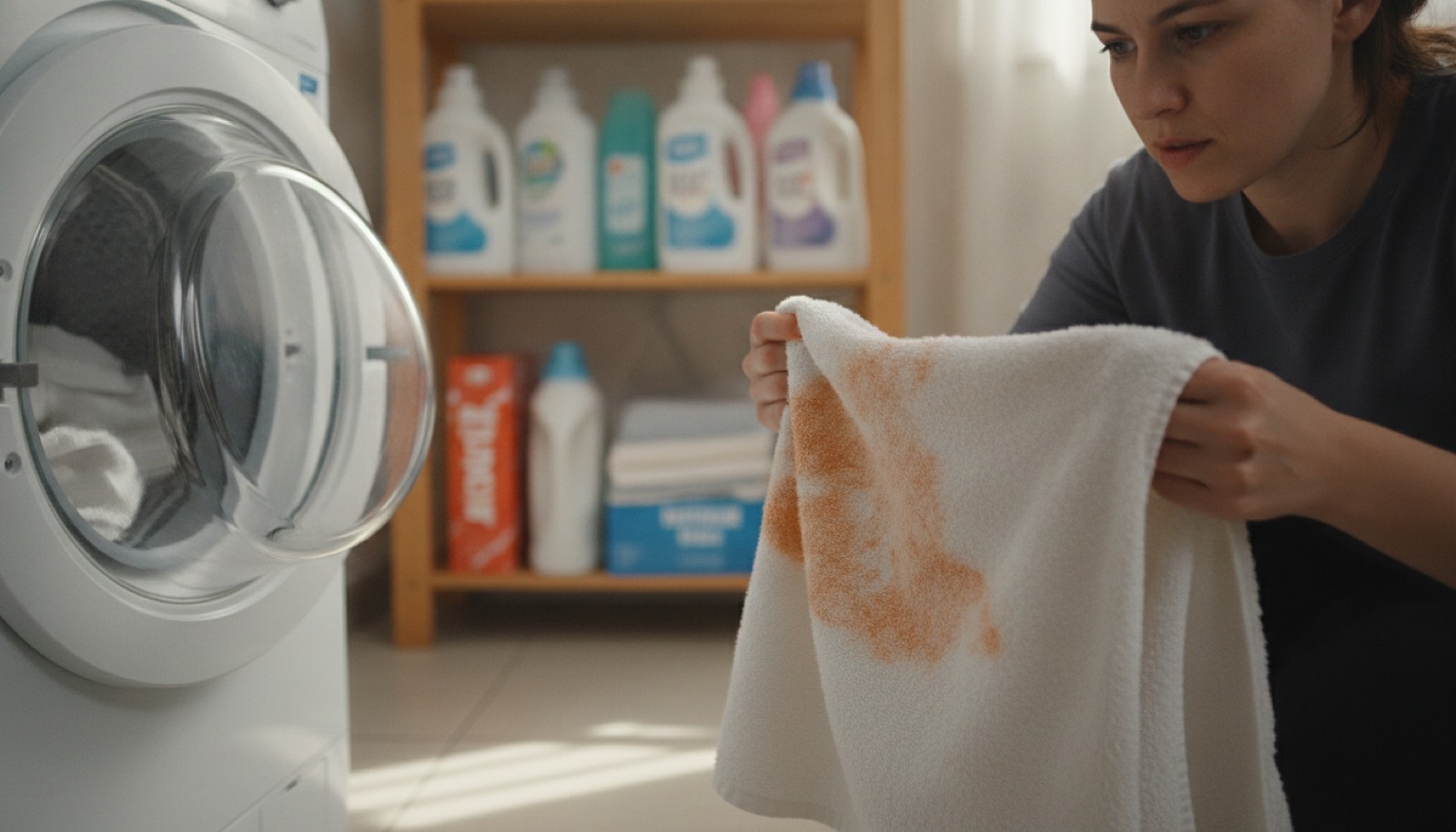
- Ruined laundry, white fabrics pick up rust during washing.
- Scale and rust accumulation inside water heaters, dishwashers and washing machines, shortening their service life.
- Metallic taste in drinking water, coffee and tea.
- Clogged aerators, valves and irrigation emitters.
One caveat: iron staining sometimes coexists with conditions that do matter for health, such as bacteria or low pH that leaches copper and lead from plumbing. A stained tub is a good reason to run a complete test, not just an iron test.
What is the reddish slime in my toilet tank?
Lift the toilet tank lid. If you find reddish-brown, slimy or fluffy deposits clinging to the walls and float, you are most likely looking at iron bacteria. They do not cause disease, but they are the hardest iron problem to control: the biofilm clogs pumps, screens and pressure tanks, feeds odor complaints, and protects the colony from simple filtration.
The standard response, described in state health and extension guidance, is shock chlorination of the well and plumbing, sometimes repeated, followed by continuous treatment when the bacteria return. Because the slime can foul softener resin and filter media, confirming or ruling out iron bacteria before buying equipment protects the investment.
How do you stop iron stains for good?
The toolbox is well established; what changes is the match between tool and iron type:
| Treatment | How it works | Best suited for |
|---|---|---|
| Water softener (ion exchange) | Exchanges dissolved iron along with hardness minerals | Modest levels of ferrous iron in hard water, with no iron bacteria |
| Oxidation + filtration (air injection or chlorination, then catalytic media filter) | Converts dissolved iron to solid rust, then filters it out | Moderate to high ferrous iron; also treats manganese and sulfur odor |
| Sediment / media filtration | Physically captures particles | Ferric iron already present as particles |
| Shock chlorination, then ongoing disinfection if needed | Destroys biofilm in the well and plumbing | Iron bacteria |
In practice, Florida well homes usually need a combination: an oxidizing iron filter ahead of a softener, with disinfection when bacteria are present. That sequence is the heart of the whole-house systems we describe on our well water treatment page. If your water also smells, start with our guide to rotten egg odor, and for the full picture of what Florida groundwater carries, read the complete Florida well water guide.
The design starts with numbers: iron concentration, iron type, manganese, pH, hardness. A free in-home water test gives you those numbers in about 20 minutes, with no obligation.
Frequently asked questions about iron stains from well water
Is iron in well water harmful to drink?
At the levels found in most private wells, iron is not a health hazard, it is an essential nutrient, and the EPA limit of 0.3 mg/L is a secondary standard based on staining and taste, not on health. The practical costs are stained fixtures and laundry, metallic taste, and clogged appliances.
Why do my white clothes turn orange in the wash?
Dissolved ferrous iron oxidizes during the wash cycle, especially with detergents and warm water, and deposits as rust particles in fabric. Once iron is in the supply at or above roughly 0.3 mg/L, laundry staining is one of the first symptoms households notice.
Will chlorine bleach remove iron stains?
No, it usually makes them worse. Chlorine oxidizes dissolved iron into solid rust, setting the stain into fabric and porcelain. Rust-specific removers based on oxalic or hydrosulfite chemistry work better, and the permanent fix is removing the iron before it reaches your fixtures.
How much iron does it take to cause stains?
Staining begins around 0.3 milligrams per liter, which is exactly why the EPA set its secondary aesthetic limit at that value. Many Florida wells run well above that level, so visible orange staining within days of cleaning is common without treatment.
Can a water softener alone fix my iron problem?
Sometimes, but only for modest levels of dissolved ferrous iron and only when no iron bacteria are present. Particulate ferric iron and bacterial iron will foul a softener's resin. A water test that identifies the iron type and level tells you whether a softener, an oxidizing iron filter, or both are required.
Sources
- U.S. Environmental Protection Agency. Secondary Drinking Water Standards: Guidance for Nuisance Chemicals (iron 0.3 mg/L, manganese 0.05 mg/L). epa.gov
- U.S. Geological Survey. Iron and manganese in groundwater, water quality topics. usgs.gov
- Centers for Disease Control and Prevention. Private Wells, water quality and treatment guidance. cdc.gov
- Florida Department of Health. Private Well Testing and water quality guidance for well owners. floridahealth.gov
- University of Florida IFAS Extension. Publications on iron, iron bacteria and domestic well water treatment. edis.ifas.ufl.edu