The rotten egg smell in well water comes from hydrogen sulfide (H2S), a gas produced when sulfur-reducing bacteria feed on sulfur compounds in groundwater, in the well itself, or inside your water heater. It is common in Florida's limestone aquifers, rarely harmful at household levels, but corrosive, unpleasant, and very treatable once you locate the source.
What causes the rotten egg smell in well water?
Hydrogen sulfide forms underground when naturally occurring sulfate-reducing bacteria consume sulfate dissolved in groundwater and release H2S gas as a byproduct. These bacteria are not disease-causing organisms, they thrive in oxygen-poor environments like deep wells, plumbing dead ends, and the bottom of water heaters. The gas can also occur naturally where groundwater moves through sulfur-bearing rock such as limestone and gypsum, exactly the geology that underlies most of Florida.
That geology matters. Florida homes draw groundwater shaped by the state's karst limestone, and the U.S. Geological Survey documents sulfate and hydrogen sulfide as characteristic features of groundwater that has traveled through carbonate and gypsum formations. In practical terms: a sulfur smell in a Florida well is common, expected, and fixable, not a sign that something went suddenly wrong with your well.
There are four typical points of origin, and the fix depends on which one you have:
- The groundwater itself, carrying dissolved H2S from the aquifer. The smell appears in both hot and cold water, at every faucet.
- The well, where sulfur bacteria colonize the casing and pump.
- The plumbing or pressure tank, where bacteria establish in low-flow sections.
- The water heater, when bacteria react with the magnesium anode rod. The smell appears only in hot water.
Is hydrogen sulfide in water dangerous?
At the levels typically found in private wells, hydrogen sulfide is a nuisance contaminant, not a regulated health threat. The EPA does not set a primary (health-based) drinking water standard for H2S; the related secondary standards cover odor and sulfate, with sulfate limited to 250 mg/L as a guideline for taste and laxative effects. The Agency for Toxic Substances and Disease Registry (ATSDR) notes that hydrogen sulfide is detectable by smell at very low concentrations, well below the levels that cause health effects, which is why your nose finds it long before it becomes a medical issue.
Three real consequences still deserve attention:
- Corrosion. H2S attacks iron, steel, copper and brass, blackens fixtures, and shortens the life of water heaters and appliances.
- Quality of life. Drinking, cooking and bathing in sulfur water is simply unpleasant, and guests notice it before you do, because residents get used to the smell.
- A flag worth testing. Odor problems sometimes ride along with iron, manganese, bacteria or low pH. A proper water test tells you whether the smell is the whole story or just the most noticeable part of it.

Why does only my hot water smell like sulfur?
If the rotten egg smell shows up only when you run hot water, the problem usually lives inside the water heater, not the well. Most tanks ship with a magnesium anode rodthat protects the tank from corrosion. In water with sulfates and the right bacteria, that rod supplies electrons that help convert sulfate into hydrogen sulfide, concentrating the odor in the hot side of the house. Florida's health guidance for private wells points to the water heater as one of the first things to check for sulfur odor.
The usual remedies, in order of cost:
- Flush and disinfect the water heater tank.
- Raise the tank temperature temporarily per manufacturer guidance to knock back bacteria, then restore the safe setting.
- Replace the magnesium anode rod with an aluminum-zinc rod.
- If odor persists, treat the supply line feeding the heater.
How do you confirm it is hydrogen sulfide?
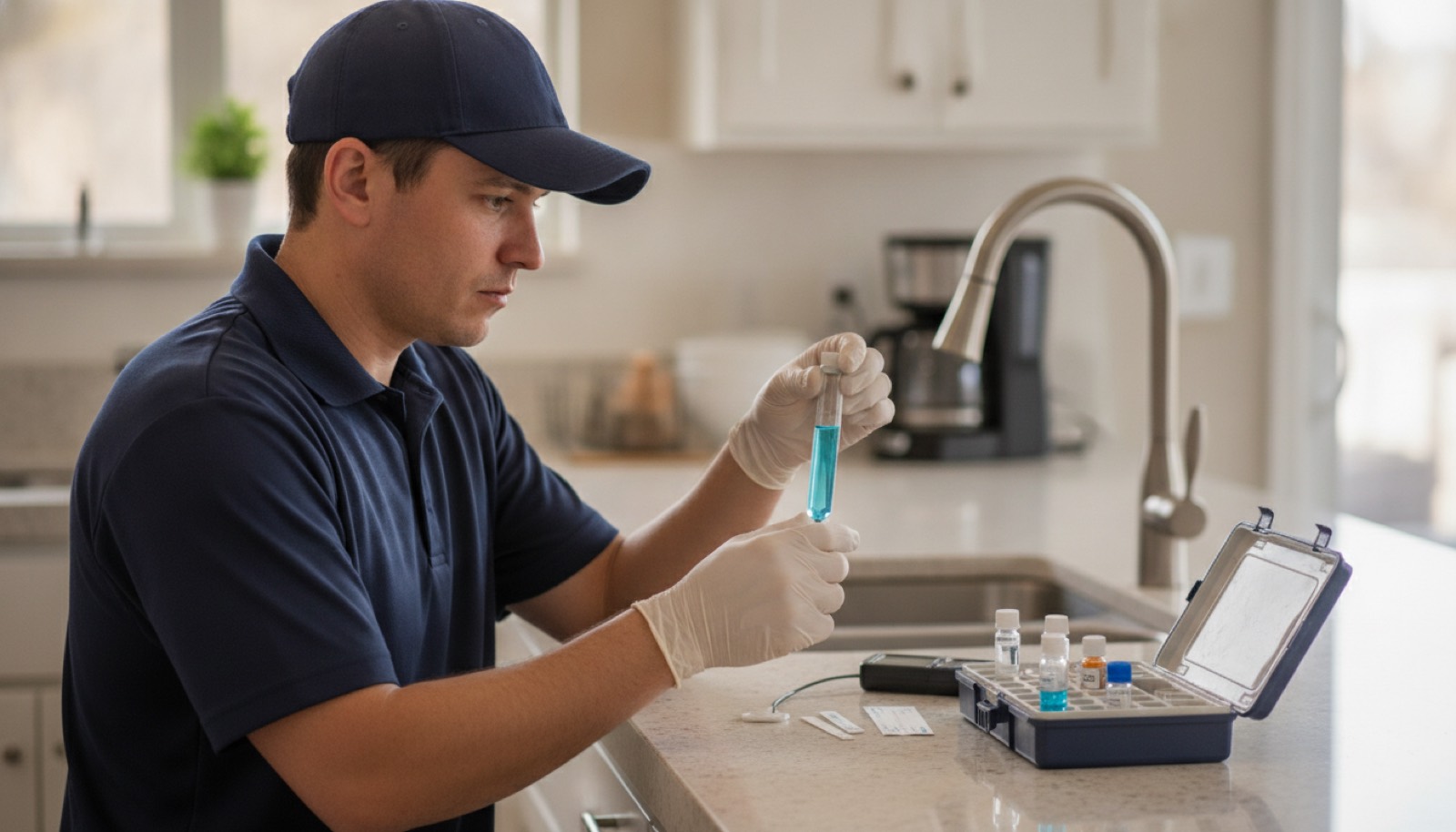
Hydrogen sulfide escapes from water quickly, so a sample mailed to a lab days later can test clean even when your bathroom says otherwise. The practical diagnostic is on-site testing, done at the tap, within minutes of drawing the water. A useful home observation you can make today: run a glass of cold water at an outside spigot and one of hot water at a sink, smell both, and note whether the odor is in one, the other, or both. That single comparison narrows the source dramatically.
| Observation | Most likely source |
|---|---|
| Smell in hot water only | Water heater (anode rod + bacteria) |
| Smell in hot and cold, at all faucets, all the time | Groundwater carrying dissolved H2S |
| Smell strongest first thing in the morning, then fades | Sulfur bacteria in the well, tank or plumbing |
| Smell only at one faucet | Bacteria in that fixture or branch line |
A complete test should also check iron, manganese, hardness, pH and bacteria, because the right treatment design depends on the full picture, not the smell alone. Prevent Water runs this kind of on-site analysis free at your home, which avoids the dissipation problem entirely.
How do you remove the rotten egg smell for good?
Treatment is matched to the source and the concentration. Florida health and University of Florida IFAS extension guidance describe a consistent toolbox:
| Treatment | How it works | Best suited for |
|---|---|---|
| Shock chlorination of the well | High-dose disinfection of casing and plumbing | Sulfur bacteria established in the well or pipes; often repeated periodically |
| Activated carbon filtration | Adsorbs the dissolved gas | Low H2S levels; also improves taste and removes chlorine |
| Aeration | Strips the gas out of the water before it enters the house | Low to moderate levels; no chemicals added |
| Oxidation + filtration (chlorine or air injection, then filter) | Converts H2S to solid sulfur particles, then filters them out | Moderate to high levels; also handles iron and manganese |
| Anode rod replacement | Removes the magnesium that feeds the reaction | Hot-water-only odor |
In Florida wells, hydrogen sulfide rarely travels alone, iron and hardness usually come with it. That is why whole-house systems for well homes typically combine oxidation, filtration and conditioning in one treatment train. Our well water treatment page explains how those stages fit together, and the companion guides on iron stains from well water and the complete Florida well water guide cover the rest of the picture.
Frequently asked questions about sulfur smell in well water
Is it safe to shower in water that smells like rotten eggs?
At the concentrations typically found in private wells, hydrogen sulfide is considered a nuisance rather than a health threat, so showering is generally safe. The gas is unpleasant and can irritate eyes and airways at much higher levels, which is why persistent strong odor is worth diagnosing with a water test.
Why does the sulfur smell come and go?
Hydrogen sulfide is a dissolved gas, so its presence varies with water use, temperature, and how active the sulfur-reducing bacteria are. The smell is often strongest in the morning or after time away from home, when water has been sitting in the pipes and the gas has accumulated.
Will a water softener remove the rotten egg smell?
No. Water softeners exchange calcium and magnesium ions and do not remove dissolved gases like hydrogen sulfide. You need aeration, oxidation followed by filtration, or activated carbon sized to the H2S level, and a softener can be added after that stage if the water is also hard.
Does boiling water remove hydrogen sulfide?
Boiling drives the gas out of the water and into the air, so the smell fades from the pot but spreads through the room. It is not a practical or complete fix for a household supply, treatment at the well or at the point of entry is the reliable approach.
Can hydrogen sulfide damage my plumbing?
Yes. Hydrogen sulfide is corrosive to metals such as iron, steel, copper and brass. Over time it can darken copper and silverware, blacken water inside pipes, and shorten the life of fixtures and water heaters, which is a financial reason to treat it even though it is not a primary health concern.
Sources
- U.S. Environmental Protection Agency. Secondary Drinking Water Standards: Guidance for Nuisance Chemicals (sulfate 250 mg/L, odor). epa.gov
- Agency for Toxic Substances and Disease Registry (CDC). Toxicological Profile and ToxFAQs: Hydrogen Sulfide. atsdr.cdc.gov
- U.S. Geological Survey. Groundwater quality in carbonate aquifers and the Floridan aquifer system. usgs.gov
- Florida Department of Health. Private Well Testing, water quality and odor guidance for well owners. floridahealth.gov
- University of Florida IFAS Extension. Publications on hydrogen sulfide, sulfur bacteria and domestic well water treatment. edis.ifas.ufl.edu