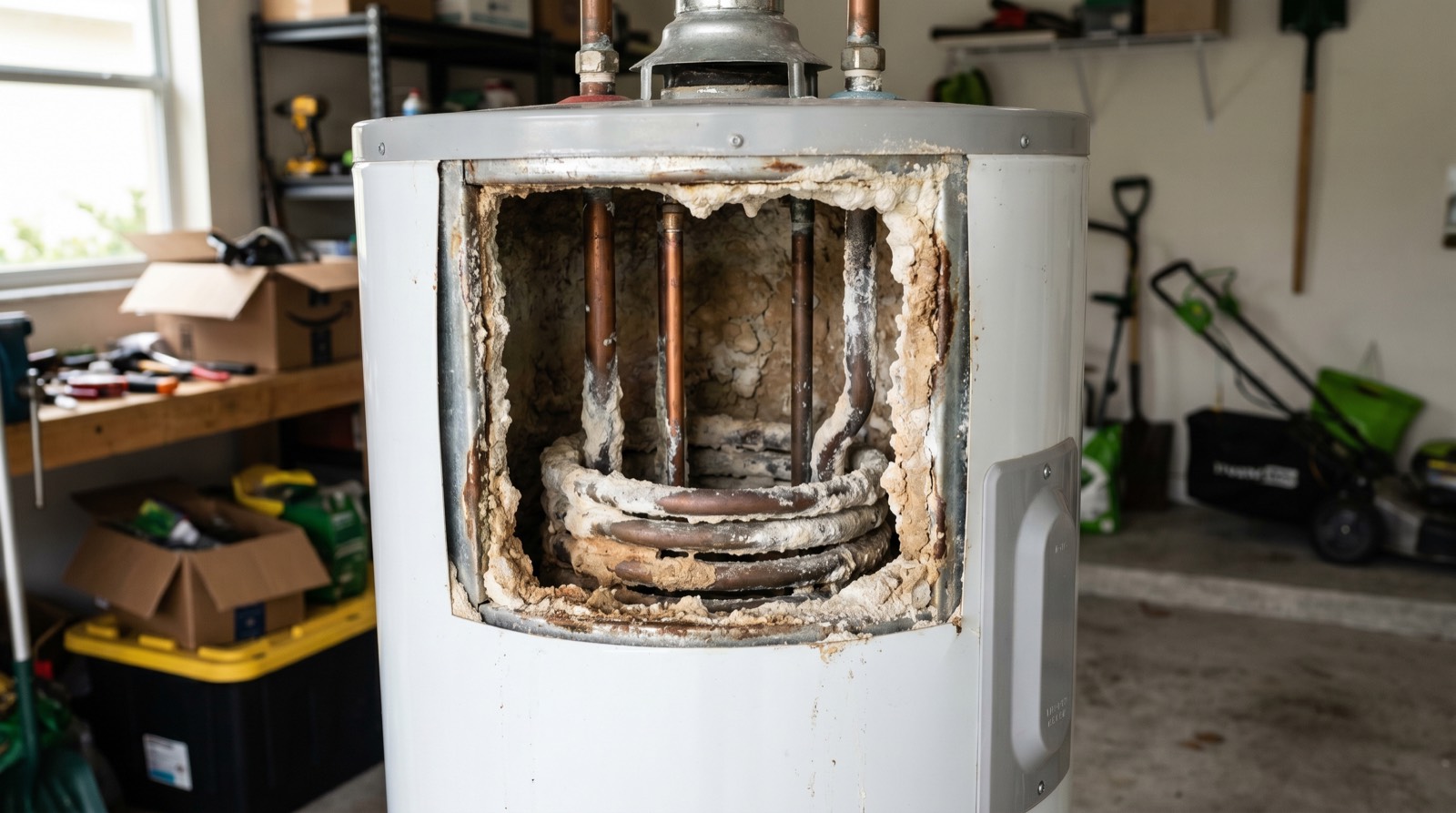
Hard water damages appliances by depositing calcium carbonate scale, the same chalky mineral the water dissolves out of Florida's limestone aquifer. Inside a water heater that scale insulates the element, forcing it to run hotter and longer; inside dishwashers and washers it clogs jets and valves. The U.S. Department of Energy notes scale reduces heating efficiency and can shorten a heater's life.
How does hard water damage appliances?
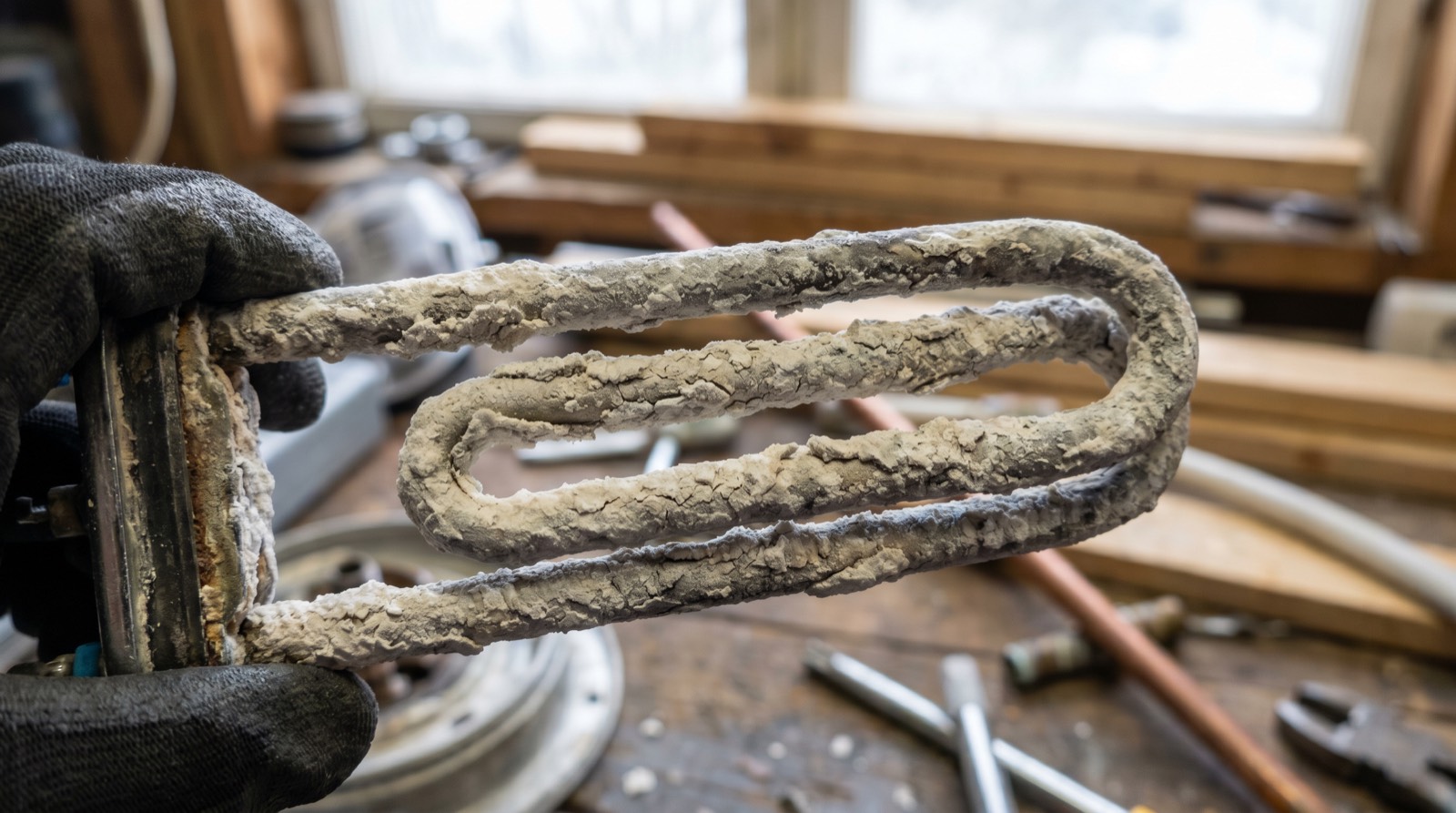
It comes down to one chemical event. Florida's water carries dissolved calcium and magnesium from the limestone Floridan aquifer, putting much of the state in the USGS very hard band above 180 mg/L as calcium carbonate. When that water is heated or left to evaporate, the dissolved minerals precipitate out as a hard, chalky crust called limescale. Anywhere your water gets hot or sits, a heater tank, a dishwasher jet, a washing-machine valve, that crust accumulates. We cover the underlying geology in our complete Florida hard water guide.
What does scale do to a water heater?
The water heater takes the worst of it because heat accelerates scale formation. As calcium carbonate coats the heating element and tank bottom, it acts as an insulating blanket. The element now has to push heat through a mineral crust to warm the water, so it runs hotter and longer for the same result. The U.S. Department of Energy identifies sediment and scale buildup as a cause of reduced efficiency and a shorter service life. On gas heaters the scale also creates hotspots that stress the tank; on electric heaters it can burn out the element early.
A widely cited benchmark study by the Water Quality Research Foundation tested appliances on hard versus softened water. Over a 15-year simulated lifespan, gas and electric water heaters running on softened water retained their original efficiency, while units on hard water lost efficiency as scale accumulated. The same study found softened water helped other appliances and fixtures last closer to their rated life.
Which appliances suffer most?
Scale follows the heat and the moving water, so the heaviest hit list is predictable:
| Appliance or fixture | How hard water hurts it |
|---|---|
| Water heater | Scale insulates the element, lowering efficiency and shortening life |
| Dishwasher | Scale clogs spray jets and heating element; spots on dishes; more detergent |
| Washing machine | Scale on valves and heaters; stiff, dingy laundry; more detergent needed |
| Coffee makers, kettles, ice makers | Scale lines reservoirs and tubes, slowing flow and shortening life |
| Faucets and shower heads | Mineral crust blocks aerators and nozzles, cutting flow |
What does the damage cost you?
The cost shows up in three honest ways, even if the exact dollars depend on your home:
- Higher energy bills: a scaled water heater uses more energy to heat the same water, because the mineral crust insulates the element. The Department of Energy ties scale and sediment directly to lost heating efficiency.
- Earlier replacement: heaters and appliances that fight scale tend to fail before their rated lifespan, turning a planned 12-year heater into an earlier expense.
- More detergent and soap: the American Cleaning Institute documents that hard water increases detergent use, because minerals neutralize the surfactants before they can clean.
How do you stop the damage?
You stop scale by removing the minerals before the water reaches your appliances, not by scrubbing it off afterward:
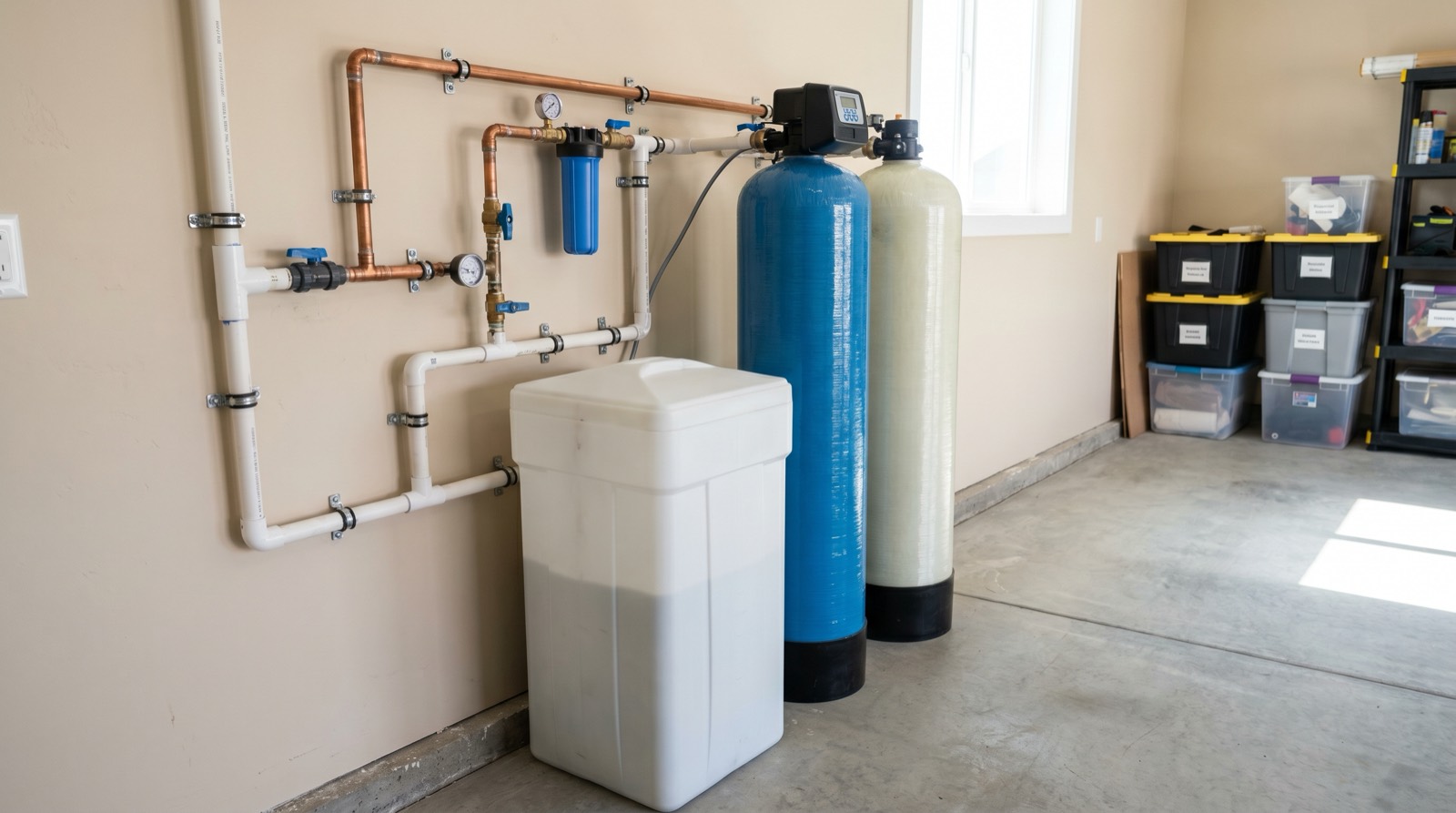
- Install a softener or conditioner. A salt-based ion-exchange softener (certified to NSF/ANSI 44) removes the calcium and magnesium, so no new scale forms. A salt-free conditioner crystallizes the minerals to prevent most scale without salt. This is the root fix.
- Flush the heater yearly as maintenance. Draining loose sediment slows buildup and is good practice, but it only manages the symptom; it does not stop new scale.
- Treat the whole house, not one tap. Because scale forms everywhere the water goes, the protective fix is a system at the home's entry point, the same logic behind whole-house treatment and the well water systems many Florida families choose.
Hard water rarely arrives alone. The same test that reads your hardness usually reads the limescale story on your fixtures too, which is why this pairs naturally with our guide to limescale on faucets and glass shower doors. The honest first step is your number. A free in-home test measures your real hardness in about twenty minutes, with no pressure to buy.
Frequently asked questions about hard water and appliances
Does hard water really shorten the life of a water heater?
Yes. Hard water deposits calcium carbonate scale on the tank bottom and heating element, and that mineral crust insulates the element so it works harder and runs hotter to heat the same water. The U.S. Department of Energy notes that sediment and scale buildup reduce heating efficiency and can shorten a water heater's service life. A Water Quality Research Foundation benchmark study found that water heaters run on softened water retained their original efficiency over a 15-year simulated lifespan, while heaters on hard water lost efficiency as scale accumulated.
How fast does scale build up in Florida hard water?
It depends on your hardness, but Florida's water is among the hardest in the country because it comes from the limestone Floridan aquifer, often in the USGS very hard band above 180 mg/L. The harder the water and the hotter it is heated, the faster calcium carbonate precipitates out. In very hard water, a visible scale layer can form on a heating element within a year or two, which is why Florida homes notice the problem sooner than homes in soft-water regions.
Can I just flush my water heater to fix scale?
Flushing and draining the tank yearly helps remove loose sediment and slows buildup, and it is good maintenance. But it does not stop new scale from forming, because the cause, dissolved hardness minerals, keeps arriving with every gallon. Flushing manages the symptom. Softening the water removes the minerals before they reach the heater, which is the only way to actually prevent scale rather than chase it.
Does hard water damage dishwashers and washing machines too?
Yes. Scale builds up on heating elements, spray jets and valves inside dishwashers and washing machines, the same way it does in a water heater. Hard water also forces you to use more detergent, because the minerals neutralize the surfactants first. The American Cleaning Institute documents that hard water raises detergent use, and manufacturers commonly cite scale as a driver of reduced appliance performance and repairs over time.
Will a water softener pay for itself in appliance savings?
For many Florida homes it contributes meaningfully, though we will not promise an exact dollar figure because it depends on your hardness, water use and appliance prices. The mechanism is real: a softener removes the calcium and magnesium so heaters keep their efficiency, appliances last closer to their rated life, and you use less detergent and soap. A free in-home test measures your hardness so you can weigh the cost against your own numbers.
Sources
- U.S. Department of Energy. Water Heating, sediment and scale buildup, Energy Saver. energy.gov
- Water Quality Research Foundation. The Effect of Water Hardness on Appliance and Water Heater Efficiency (benchmark study by the Battelle Memorial Institute / New Mexico State University). wqrf.org
- U.S. Geological Survey. Water Hardness and Alkalinity, Water Science School. usgs.gov
- American Cleaning Institute. Soap and Detergent Performance in Hard Water. cleaninginstitute.org
- Water Quality Association. Water Hardness Map of the United States. wqa.org
- NSF International. NSF/ANSI 44 Residential Cation Exchange Water Softeners. nsf.org