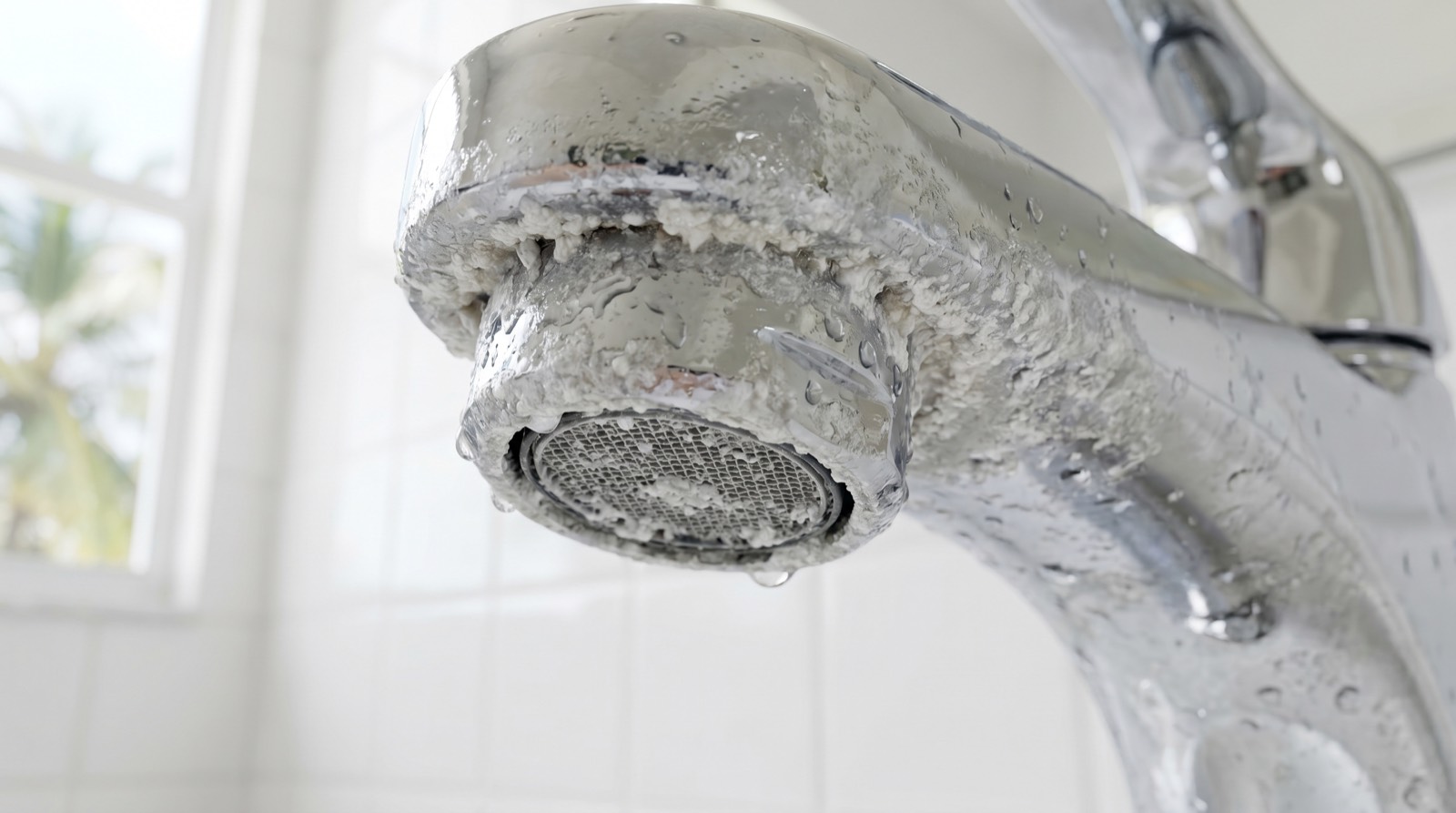
The crusty white deposits on your faucets and the cloudy film on glass shower doors are limescale, hardened calcium carbonate left behind when hard water evaporates. Florida's water dissolves these minerals from the limestone Floridan aquifer, so every drop that dries on a surface leaves a layer. Wiping it off works for a day because the cause keeps arriving with the water.
What causes limescale on faucets and glass?
It is pure geology turning into chemistry. Florida draws most of its water from the Floridan aquifer, a limestone formation, and the water dissolves calcium and magnesium on its way to your tap. The U.S. Geological Survey classifies water above 180 mg/L as calcium carbonate as very hard, and much of the state sits there, as we explain in our complete Florida hard water guide. When that mineral-rich water dries or evaporates, on a faucet spout, a shower head, a pane of glass, the water leaves but the minerals stay, hardening into the white crust we call limescale.
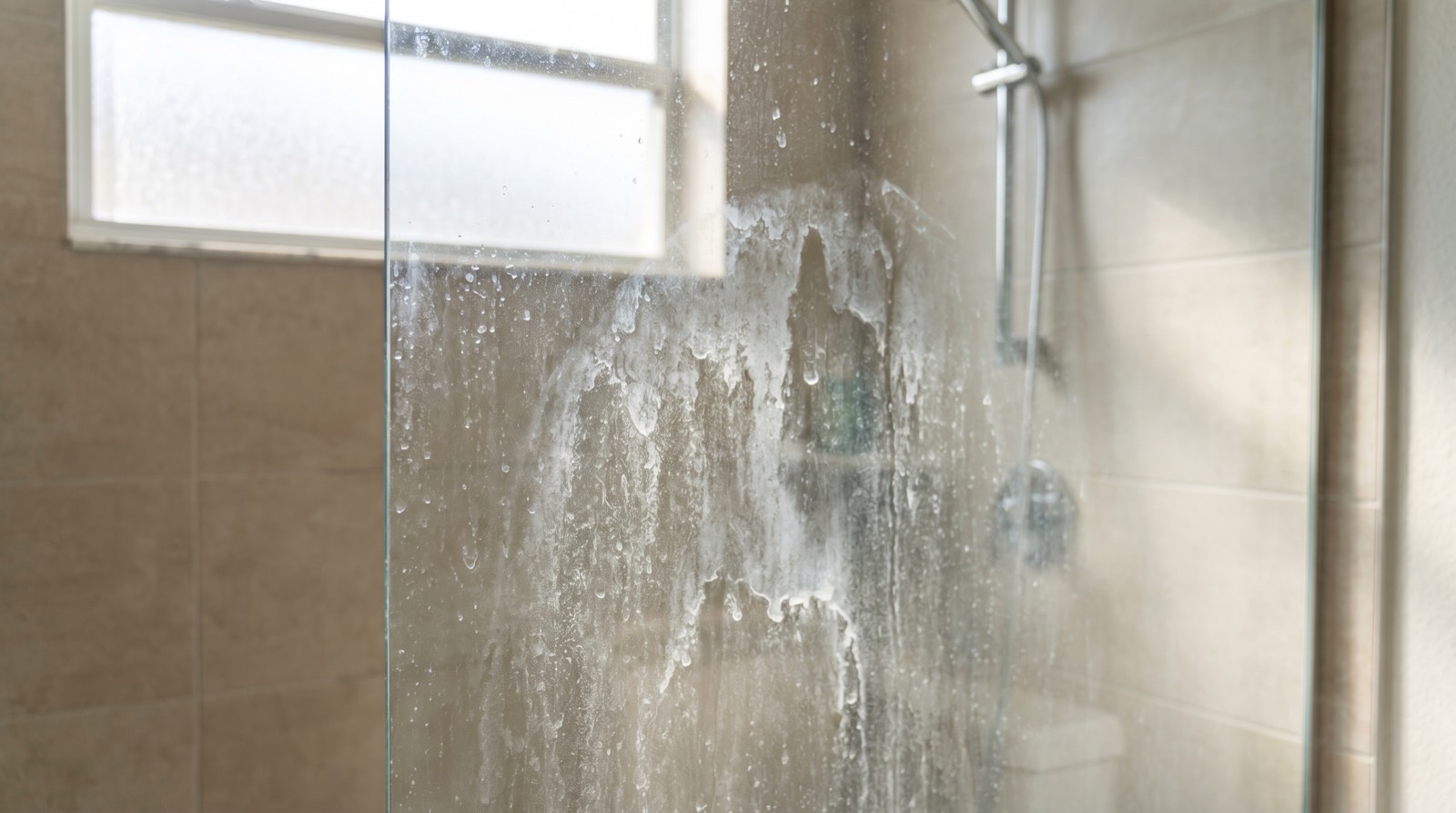
Why does limescale always come back?
Here is the honest reason your cleaning never lasts: scrubbing removes the deposit, but not the cause. The dissolved hardness minerals are in the water itself, arriving fresh with every drop from your faucet and shower. So each time the water dries, it lays down a new layer of scale on the surface you just cleaned. You are not doing anything wrong, you are fighting an endless supply. On glass it is worse: left long enough, limescale can micro-etch the surface, leaving a cloudiness that no cleaner can polish out.
| Where you see it | What is happening |
|---|---|
| White crust on faucet aerators and spouts | Calcium carbonate hardening where water drips and dries |
| Cloudy, hazy glass shower doors | Layered mineral film that can micro-etch the glass over time |
| Spots on glassware and chrome | Minerals left as water droplets evaporate |
| Clogged shower head nozzles | Scale narrowing the jets, cutting and splaying the spray |
How do you remove limescale safely?
Because limescale is calcium carbonate, a mild acid dissolves it. These methods clean what has already formed:
- White vinegar or citric acid soak. Wrap a vinegar-soaked cloth around a faucet, or unscrew the aerator and soak it, for thirty minutes to a few hours, then wipe. For shower heads, tie a bag of vinegar over the head overnight.
- Dedicated limescale remover for glass. Use a product formulated for hard water spots on shower glass, following the label, then squeegee the glass after each use to slow new buildup.
- Protect delicate surfaces. Keep acids away from natural stone (marble, travertine) and certain finishes that acid can etch or discolor. When in doubt, test a hidden spot first.
What is the permanent fix?
The permanent fix is to treat the water before it reaches your fixtures, so it no longer leaves scale when it dries:
- Whole-house water softener: a salt-based ion-exchange system (certified to NSF/ANSI 44) removes the calcium and magnesium entirely, so the water leaves no scale on glass, faucets, dishes or inside the water heater.
- Salt-free conditioner (TAC): crystallizes the minerals so they stay suspended and do not bond to surfaces, preventing most scale without salt or a brine discharge.
Either approach installs where the water enters the home, which is the same whole-house treatment logic that protects appliances too, the scale on your glass is the same scale that builds inside your water heater and appliances. Stopping it once stops it everywhere. The honest first step is knowing your hardness. A free in-home test measures it in about twenty minutes, with no pressure to buy anything.
Frequently asked questions about limescale
What exactly is the white crust on my faucets?
It is limescale, hardened calcium carbonate. Florida's water dissolves calcium and magnesium from the limestone Floridan aquifer, and when that water dries or evaporates on a faucet, those minerals are left behind as a white, chalky crust. The U.S. Geological Survey classifies much of Florida's water as very hard, above 180 mg/L as calcium carbonate, which is why the buildup forms so quickly here compared with soft-water regions.
Why do my glass shower doors get cloudy and stay that way?
Every time hard water dries on the glass, it leaves a thin film of calcium carbonate. Over weeks those layers bond into a cloudy, etched-looking haze that ordinary glass cleaner cannot remove, because it is mineral, not dirt. Left long enough, limescale can actually micro-etch the glass surface, leaving permanent cloudiness. Removing it early and stopping new deposits is the only way to keep the glass clear.
Does vinegar remove limescale?
Yes, mild acids like white vinegar or citric acid dissolve calcium carbonate, which is why a vinegar soak works on a faucet aerator or shower head. It is a fine short-term cleaner. The catch is that it only treats what has already formed; the next time hard water dries on the surface, the scale starts rebuilding. Acid cleaning is maintenance, not a solution, and it should be kept away from natural stone and certain finishes that acids can damage.
Why does limescale come back so fast no matter how often I clean?
Because cleaning removes the deposit but not the cause. The dissolved hardness minerals arrive with every drop of water from your tap, so each time the water dries it leaves a fresh layer. You are scrubbing the symptom while the source keeps feeding it. The only way to stop the cycle is to remove the calcium and magnesium from the water before it reaches your fixtures.
What is the only permanent fix for limescale?
Treat the water, not the surface. A whole-house water softener removes the calcium and magnesium through ion exchange, so the water no longer leaves scale when it dries, on faucets, glass, dishes or inside your water heater. A salt-free conditioner is a lower-maintenance alternative that crystallizes the minerals so they do not stick. Both stop new limescale at the source. A free in-home test confirms your hardness so you can size the system correctly.
Sources
- U.S. Geological Survey. Water Hardness and Alkalinity, Water Science School. usgs.gov
- Water Quality Association. Water Hardness Map of the United States; Scale and Hard Water Glossary. wqa.org
- American Cleaning Institute. Cleaning in Hard Water and Mineral Deposits. cleaninginstitute.org
- U.S. Environmental Protection Agency. Secondary Drinking Water Standards (aesthetic effects, including scaling). epa.gov
- NSF International. NSF/ANSI 44 Residential Cation Exchange Water Softeners. nsf.org