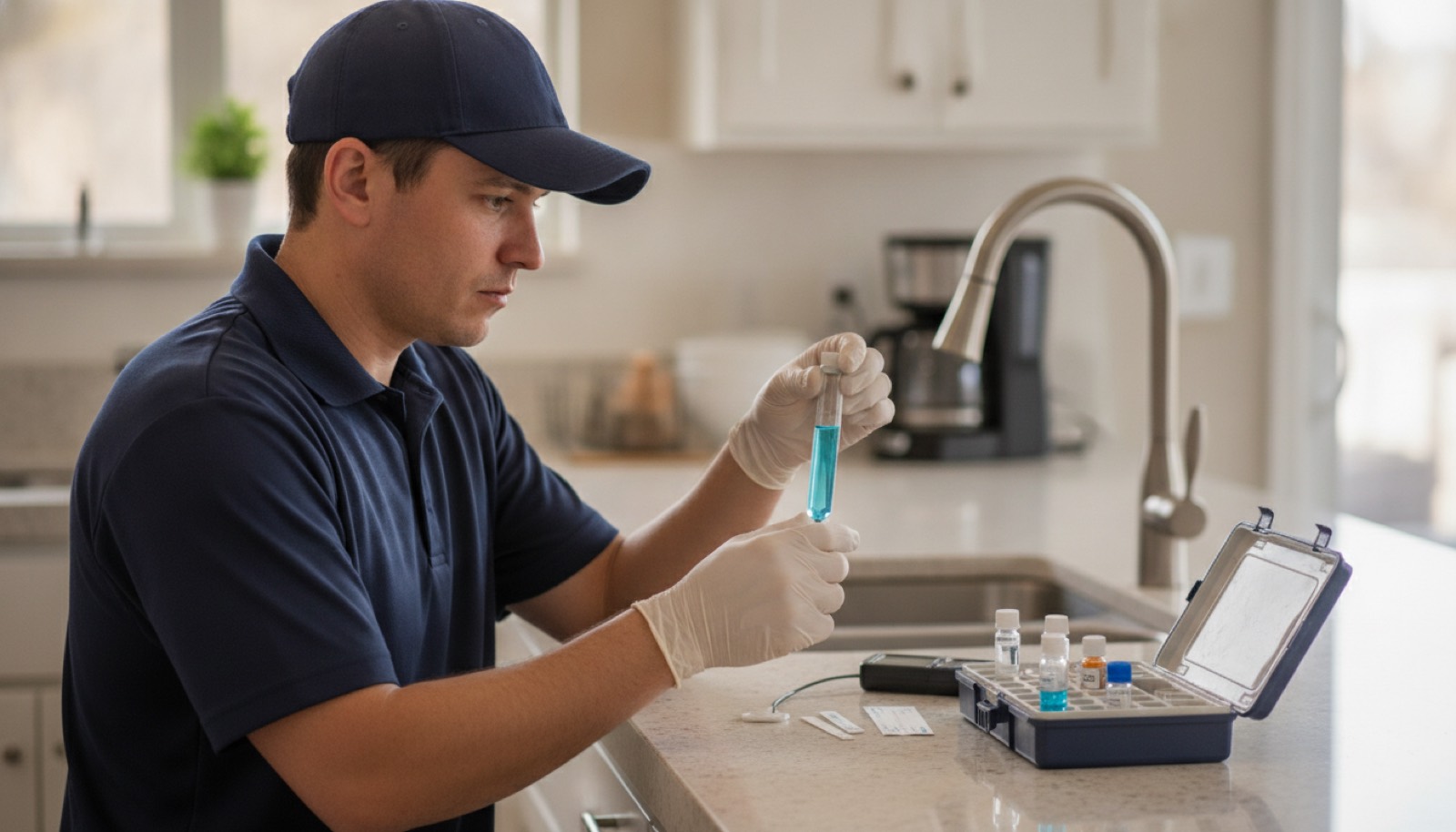
A free in-home water test takes about twenty minutes and runs three on-site checks: a chemical test for chlorine and metals, a hardness and sediment test for calcium and particles, and a pH test for how acidic or basic the water is. Together they show what is actually in your water before anyone talks about treatment. Here is exactly what each test reveals and how the visit works, with no obligation.
What does a free water test reveal?
It reveals the truth about your specific water, fast. Florida is a special case: the EPA does not test private wells, so the owner is responsible, and even city water travels through the limestone Floridan aquifer's influence. The three on-site tests cover the problems Florida homes hit most, hardness, chlorine, sediment, iron and corrosive low pH, so you stop guessing from symptoms and start seeing the readings. The point is not to alarm you; it is to give you the facts before any conversation about treatment.
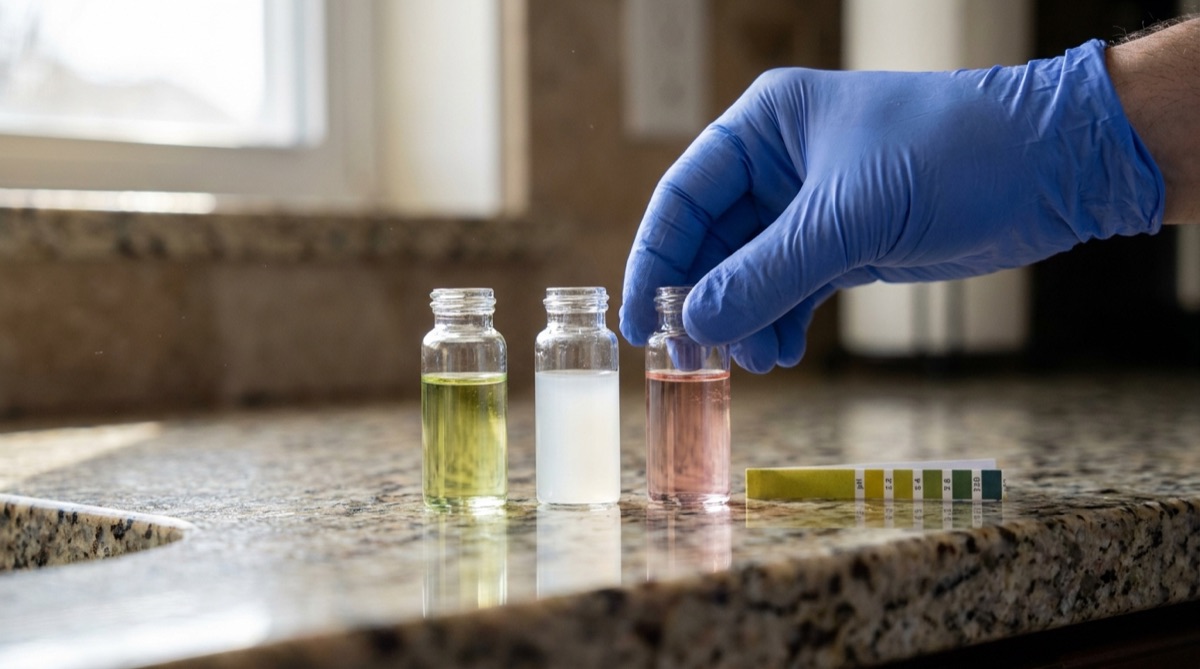
Test 1: chemical (chlorine and metals)
The chemical test uses reagents that change color in the presence of certain substances. It looks for chlorine, the disinfectant added to city water that the EPA limits to 4 mg/L and that can dry skin and hair, and for dissolved metals like iron and copper. Iron is what causes the orange-brown staining many well owners see; copper showing up can be a sign of acidic water dissolving the pipes. A reading here points straight to the problem and, if needed, to a carbon filter for chlorine or an iron stage for staining.
- Chlorine: taste, odor, dry skin and hair (EPA limit 4 mg/L)
- Iron: orange-brown stains on fixtures and laundry
- Copper: a possible signal of acidic, pipe-dissolving water
Test 2: hardness and sediment
The hardness test measures the calcium and magnesium the water carries, the minerals that cause scale, spotting and that filmy feeling on skin. The U.S. Geological Survey classifies much of Florida as very hard, above 180 mg/L as calcium carbonate. Alongside it, the sediment check looks for the visible particles, sand, silt, rust, that make water cloudy. Both readings tell you whether you need a softener for hardness, a sediment filter, or both, as our hard water guide explains.
Test 3: pH
The pH test shows whether your water is acidic or basic. The EPA's secondary range is 6.5 to 8.5; below 6.5 the water is acidic and quietly corrosive, dissolving copper pipes and leaving blue-green stains and pinhole leaks. Above the range it can taste flat or bitter. Some Florida wells run acidic, and the only way to know is to measure it. A low reading points to a neutralizer, as our acidic well water guide covers in detail. A pH reading takes seconds but it explains problems you might otherwise blame on the plumber.
How the in-home visit works
The visit is simple and short, by design:
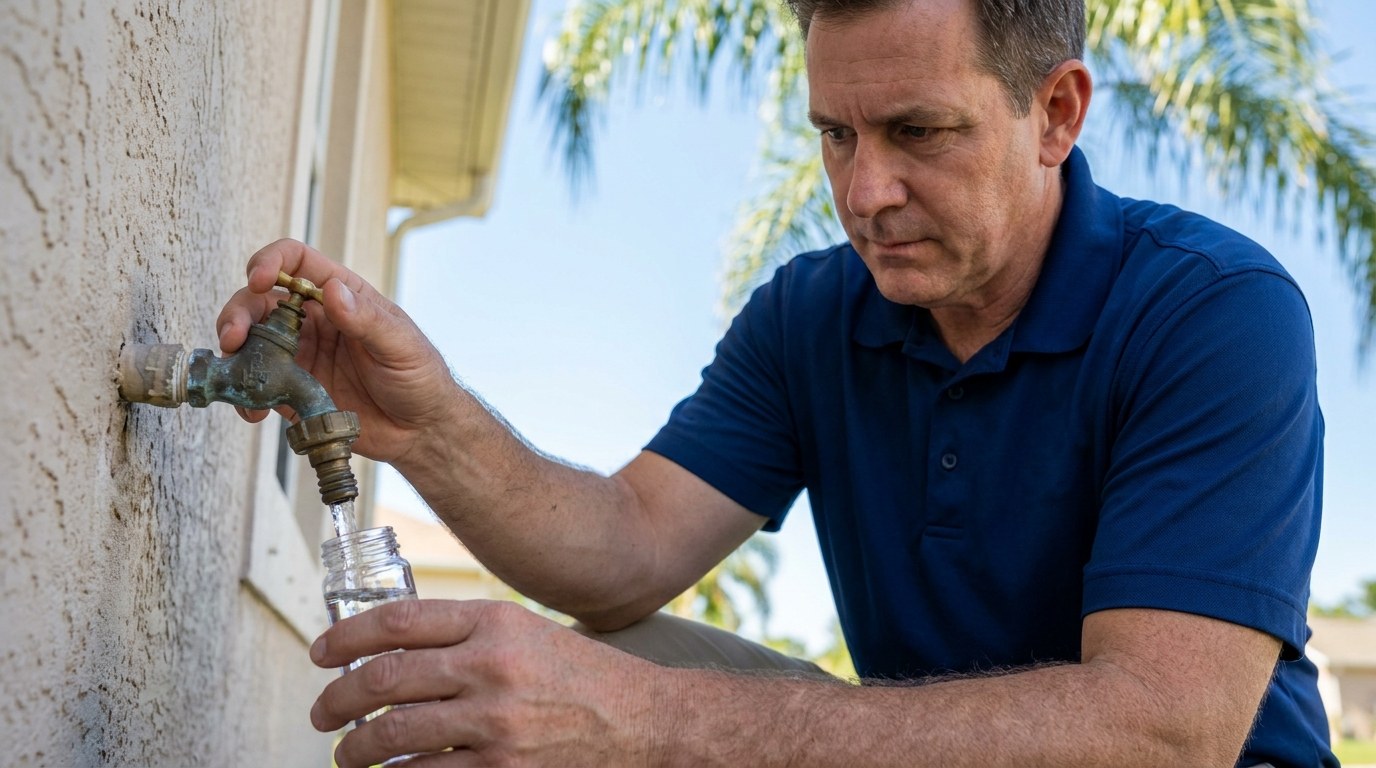
- Sample at your tap. The technician draws fresh water from your kitchen or outdoor tap.
- Run the three tests. Chemical, hardness and sediment, and pH, right there on your counter.
- Explain each result. You see the readings and hear what each one means for your home, in plain language.
- Answer your questions. No long sales pitch, just the facts about your water and what they point to.
What happens after the results
After the readings, you have the facts, and what you do with them is entirely your call. If the water is clean, that is the answer and there is nothing to buy. If the test finds problems, the results point to which solution fits, a softener for hardness, a carbon filter for chlorine, a dedicated stage for iron or sulfur, all of which our softener vs filter guide breaks down, and the cost guide explains how that shapes the price. For bacteria or trace contaminants, the EPA and CDC recommend a certified lab test at least once a year, which complements the on-site check. When you are ready, you can schedule your free in-home test with no obligation.
Frequently asked questions about the free water test
What does a free in-home water test actually check?
Three things, on site, in about twenty minutes: a chemical test that looks at chlorine and metals like iron and copper, a hardness and sediment test that measures the calcium and magnesium plus visible particles, and a pH test that shows whether the water is acidic or basic. Together these cover the most common Florida water problems, scale, staining, chlorine taste, sediment and corrosive low pH, so you see what is actually in your water before anyone talks about treatment.
Is the in-home test really free, with no obligation?
Yes. The test costs you nothing and there is no obligation to buy anything afterward. The reason it is free is simple: knowing what is in your water should not cost you money, and an honest assessment is the only fair way to talk about whether you even need treatment. If the results come back clean, that is the answer, and you have lost nothing but twenty minutes.
Does an on-site test replace a certified laboratory analysis?
No, and we will not pretend it does. An on-site test gives you fast, useful readings for the common problems, hardness, chlorine, pH, iron, sediment, so you understand your water quickly. For bacteria such as total coliform and E. coli, or for trace contaminants like nitrate and PFAS, a certified laboratory test is the gold standard, as the EPA and CDC recommend at least annually for private wells. The on-site test and the lab test work together.
How long does the visit take?
About twenty minutes. A technician runs the three on-site tests at your kitchen tap, explains each result as it comes in, and answers your questions. There is no long sales presentation; the point is for you to see and understand your own water. If you want to go further with a lab test or treatment, that is your decision to make after you have the facts.
What should I do to prepare for the test?
Almost nothing. Just have access to a kitchen or bathroom tap, and if you are on a private well, it helps to mention any symptoms you have noticed, staining, odor, cloudy water, dry skin, so the technician knows what to look for. If you have a recent water bill or any past test results, those add context, but they are not required for the on-site test.
Sources
- U.S. Environmental Protection Agency. Secondary Drinking Water Standards; Chlorine in Drinking Water; Private Wells. epa.gov
- U.S. Geological Survey. Water Hardness and Alkalinity, Water Science School. usgs.gov
- Centers for Disease Control and Prevention. Well Testing and Drinking Water Testing Frequency. cdc.gov
- Water Quality Association. Common Water Tests and What They Measure. wqa.org
- NSF International. NSF/ANSI Drinking Water Treatment Standards (42, 44, 53, 58). nsf.org
- Florida Department of Health. Private Well Testing Guidance. floridahealth.gov