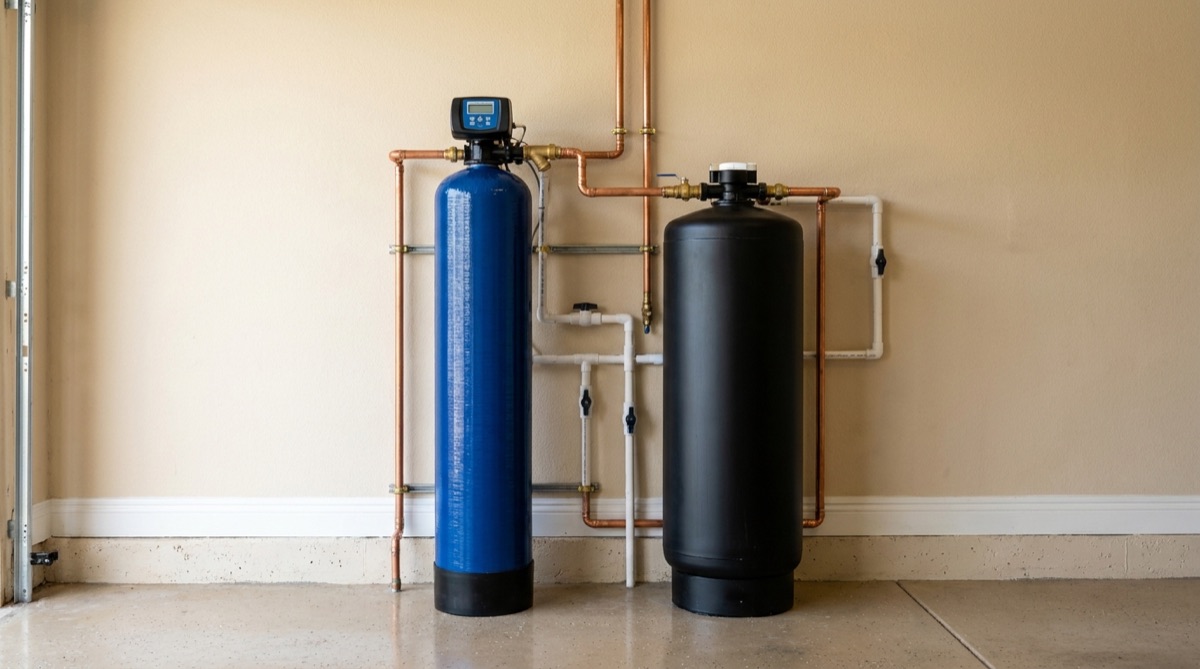
A water softener and a whole-house filter are not rivals, they solve different problems, which is why the honest answer is often both. A softener removes the calcium and magnesium that cause hard water. A carbon filter removes chlorine, taste and odor. Reverse osmosis polishes drinking water down to dissolved contaminants. Here is what each one does, what it does not, and how to tell which your Florida home needs.
Softener or filter: which do I need?
The honest answer is: whichever matches the problem in your water, and often more than one. These devices are not different brands of the same thing, they do completely different jobs. A softener fixes minerals. A carbon filter fixes chemicals and smell. Reverse osmosis fixes dissolved contaminants in drinking water. If your water has more than one of those problems, and Florida well water usually does, you need more than one solution. The rest of this guide explains each so you can match the tool to the problem.
What a water softener does
A water softener tackles hardness, the dissolved calcium and magnesium that Florida's limestone Floridan aquifer loads into the water. Through ion exchange, certified to NSF/ANSI 44, it swaps those minerals for sodium, so the water no longer leaves scale on faucets, glass, dishes or inside your water heater. That is its entire job. It does not remove chlorine, it does not remove a sulfur smell, and it does not make drinking water safer from dissolved contaminants. What it does, it does well, as our Florida hard water guide explains.
- Removes: calcium and magnesium (hardness, scale, spotting)
- Does not remove: chlorine, taste, odor, dissolved chemicals
- Standard: NSF/ANSI 44
What a carbon whole-house filter does
A whole-house carbon filter treats every drop entering the home for chlorine, taste and odor. Activated carbon adsorbs chlorine and many organic compounds, certified to NSF/ANSI 42 for aesthetic effects and NSF/ANSI 53 for certain health-related contaminants. If your water smells or tastes of chlorine, this is the unit that fixes it, including the chlorine that dries skin and hair in the shower. What it does not do is remove hardness, so on hard Florida water it pairs with a softener rather than replacing it.
- Removes: chlorine, taste, odor, many organic compounds
- Does not remove: hardness (calcium, magnesium)
- Standard: NSF/ANSI 42 (aesthetic), NSF/ANSI 53 (certain health)
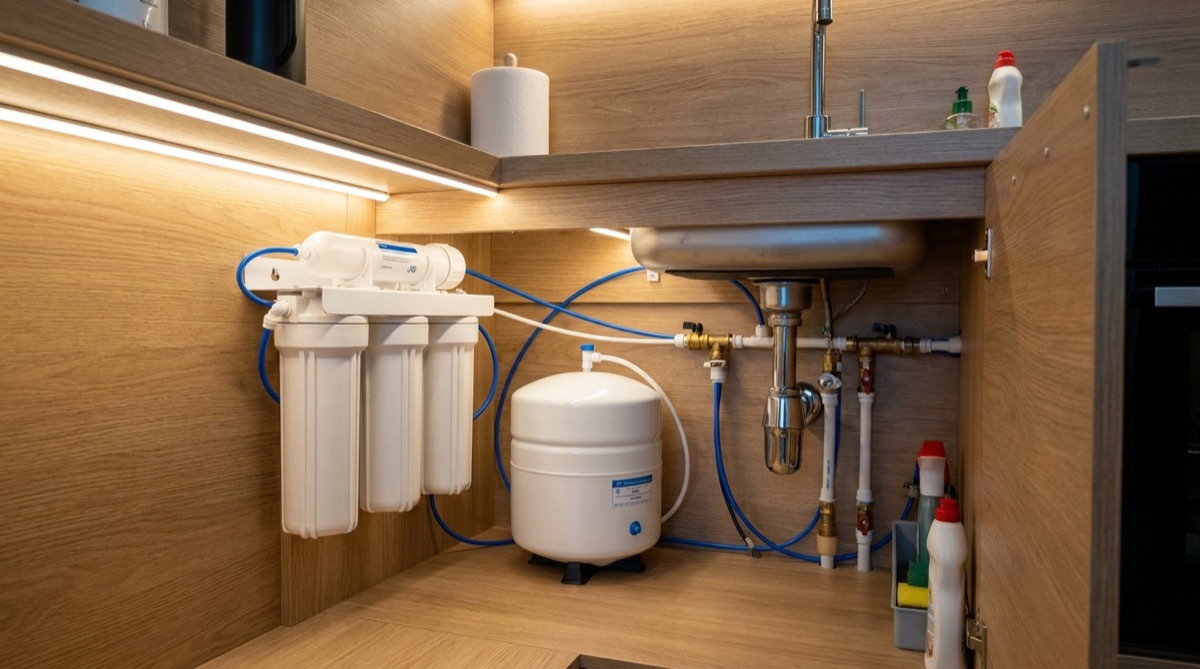
What reverse osmosis does
Reverse osmosis (RO), certified to NSF/ANSI 58, forces water through a semipermeable membrane that removes dissolved contaminants the other two cannot, including certain salts, nitrate and PFAS. It is usually installed at a single tap, the kitchen sink, because it treats a smaller volume for the water you actually drink and cook with. It is the finishing step, not a whole-house replacement, and it is the right answer when a test flags dissolved contaminants like the PFAS forever chemicals in Florida water.
- Removes: dissolved contaminants, certain salts, nitrate, PFAS
- Where: at the tap (point of use), usually the kitchen
- Standard: NSF/ANSI 58
Why many homes need more than one
Here is the part most people miss: a Florida home rarely has just one water problem. Well water can be hard and smell of sulfur and stain with iron, all at once. Each problem needs the tool built for it:
| Your problem | The right tool | Standard |
|---|---|---|
| Scale, spots, hard water | Water softener | NSF/ANSI 44 |
| Chlorine taste and odor | Whole-house carbon filter | NSF/ANSI 42 / 53 |
| Dissolved contaminants in drinking water | Reverse osmosis at the tap | NSF/ANSI 58 |
| Iron staining | Dedicated iron filter | Treatment stage |
| Sulfur smell, bacteria | Oxidation / UV disinfection | Treatment stage |
How to tell what your home needs
You decide by testing, not guessing. Hardness above the soft range calls for a softener; a chlorine taste or smell calls for carbon; worry about dissolved contaminants in drinking water calls for RO; iron, sulfur or bacteria call for dedicated stages. That is the same staged logic behind a full whole-house treatment build, and it starts with knowing what is in your water. Our free water test guide shows what the on-site checks reveal, and the cost guide explains how those problems shape the price. A free in-home test measures it all in about twenty minutes, with no pressure to buy.
Frequently asked questions about softeners and filters
What is the difference between a water softener and a whole-house filter?
They target different things. A water softener removes hardness minerals, calcium and magnesium, through ion exchange (certified to NSF/ANSI 44), which stops scale and spotting. A whole-house carbon filter removes chlorine, taste, odor and many organic compounds (NSF/ANSI 42 for aesthetics, NSF/ANSI 53 for certain health-related contaminants). One handles minerals, the other handles chemicals and smell, so they are not interchangeable.
Do I need both a softener and a filter?
Often, yes. If your water is both hard and has chlorine, taste or odor problems, a softener alone leaves the chlorine and a carbon filter alone leaves the scale. Many Florida homes, especially on well water with hardness plus sulfur or iron, end up with a combined system because each unit solves a problem the other cannot. A water test tells you whether you have one problem or several.
Is reverse osmosis the same as a whole-house filter?
No. Reverse osmosis (NSF/ANSI 58) is usually installed at a single tap, the kitchen sink, and forces water through a membrane that removes dissolved contaminants a carbon filter cannot, such as certain salts, nitrate and PFAS. A whole-house carbon filter treats all the water entering the home for chlorine and odor but does not remove those dissolved contaminants. RO is for the water you drink and cook with; whole-house carbon is for everything else.
Will a water softener remove iron or sulfur smell?
Only partially, and it is not designed for it. A standard softener can handle small amounts of dissolved iron, but heavy iron staining or a rotten-egg sulfur smell needs dedicated treatment, an iron filter or an oxidation and filtration stage, ahead of the softener. Trying to make a softener do that job shortens its life and leaves the problem. The test identifies iron and sulfur so the right stage is added.
How do I know which one my home needs?
Test the water first. Hardness above the soft range points to a softener; a chlorine taste or odor points to a carbon filter; concern about dissolved contaminants in drinking water points to reverse osmosis; iron, sulfur or bacteria point to dedicated stages. A free in-home test measures hardness, chlorine, metals, sediment and pH in about twenty minutes, so you treat the problems you actually have instead of guessing.
Sources
- NSF International. NSF/ANSI 44 Cation Exchange Water Softeners; 42 and 53 Drinking Water Treatment Units; 58 Reverse Osmosis Systems. nsf.org
- U.S. Environmental Protection Agency. Drinking Water Treatment Technologies; Home Water Treatment Units. epa.gov
- Water Quality Association. Water Treatment Methods; Reverse Osmosis and Activated Carbon. wqa.org
- U.S. Geological Survey. Water Hardness, Water Science School. usgs.gov
- Centers for Disease Control and Prevention. Choosing Home Water Filters and Other Treatment Systems. cdc.gov
- Florida Department of Health. Private Well Water Treatment Guidance. floridahealth.gov