Prevent Water.
Designed by Prevent Water · Direct flow water technology

PW RO 700.
Engineered inside. Pure by design.

Direct-flow reverse osmosis. Two precision cartridges. Intelligence built in. Prevent Water's own tankless, point-of-use system for drinking and cooking water.
TanklessPoint-of-use700 GPD class
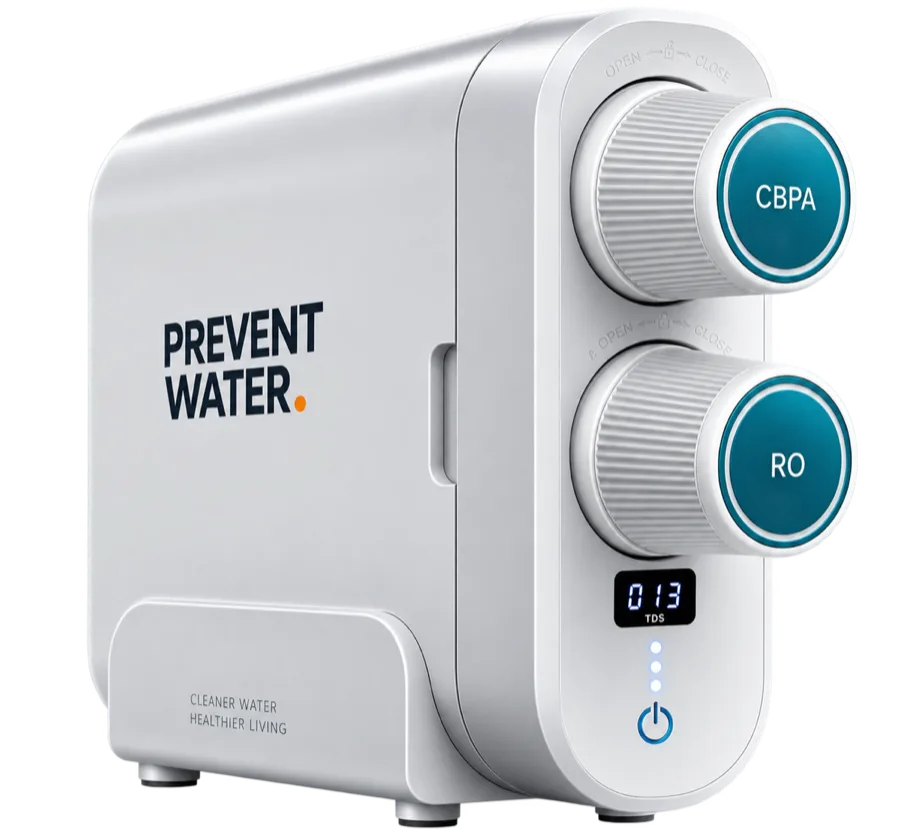
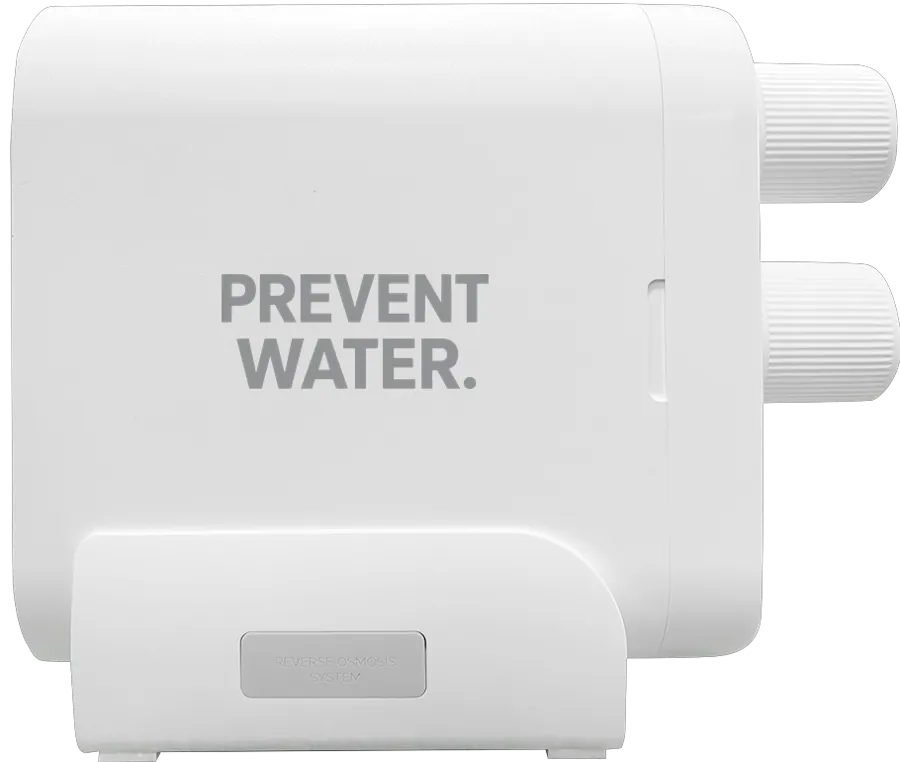
PW RO 700 front view with the CBPA and RO cartridges
The system

7 layers of protection and intelligence.

2 cartridges, 4 purification stages and 3 smart technologies.
CBPA
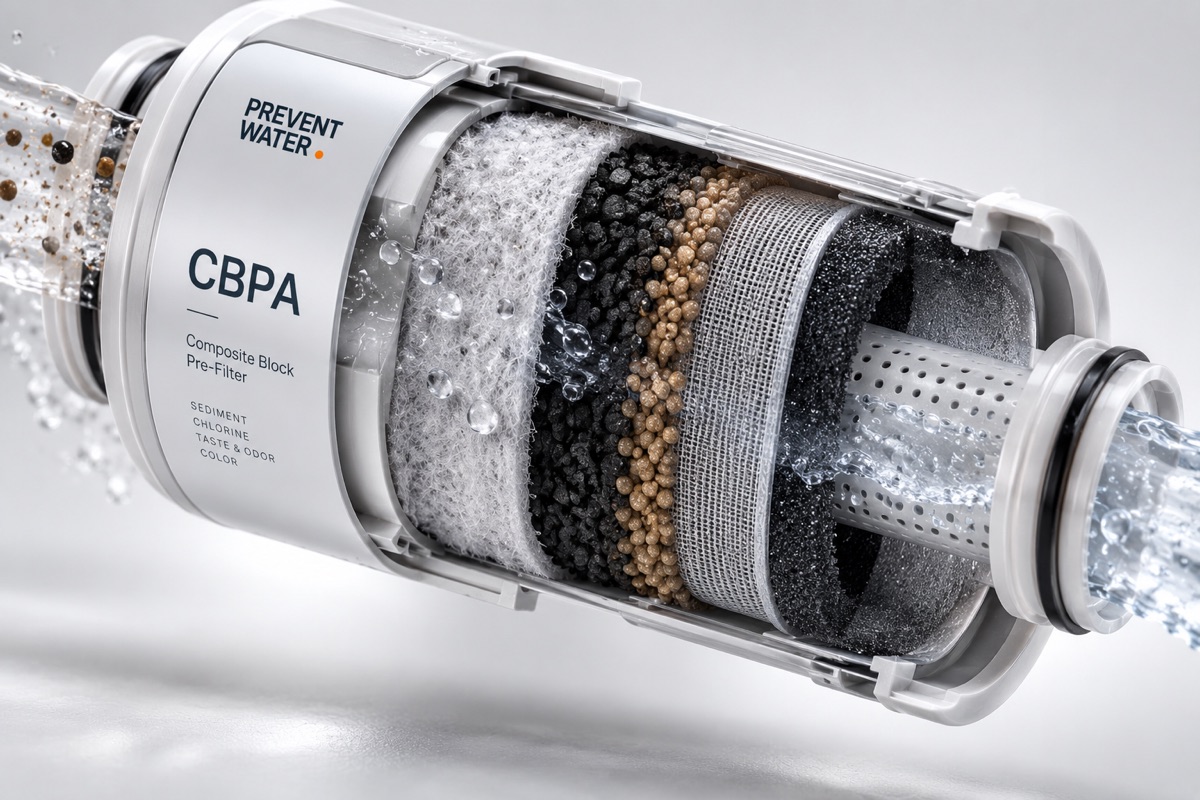
CBPA · Upper cartridge
  1. 01Sediment pre-filtration
  2. 02Residual chlorine reduction
  3. 03Color and odor reduction
RO
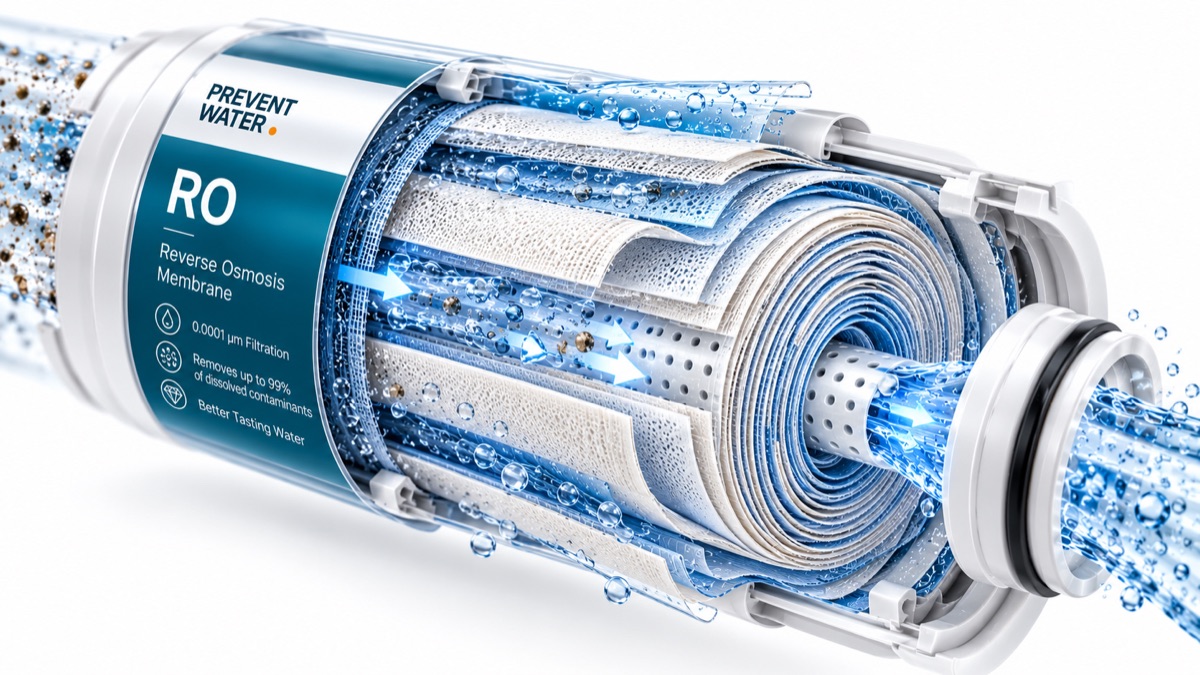
RO · Lower cartridge
04Reverse osmosisNominal 0.0001 μm membrane rating.
Smart technologies
05TDS monitoringDissolved-solids readings.
06Filter-life monitoringCBPA and RO status reminders.
07Automatic RO flushingProgrammed membrane flushing.
Two physical cartridges, not seven filters"7 layers" describes four purification functions plus three smart technologies. The three CBPA functions are performed by one composite cartridge; the smart technologies are not additional filters.
The core

Precision, made visible.

The RO membrane separates the incoming stream into purified water and concentrate. The concentrate is routed to drain.

0.0001 μmNominal membrane rating

Conceptual enlarged view, not a scale drawing of the installed cartridge. Nominal rating is not a certified contaminant-removal claim.

Engineering in view

Real components. A connected system.

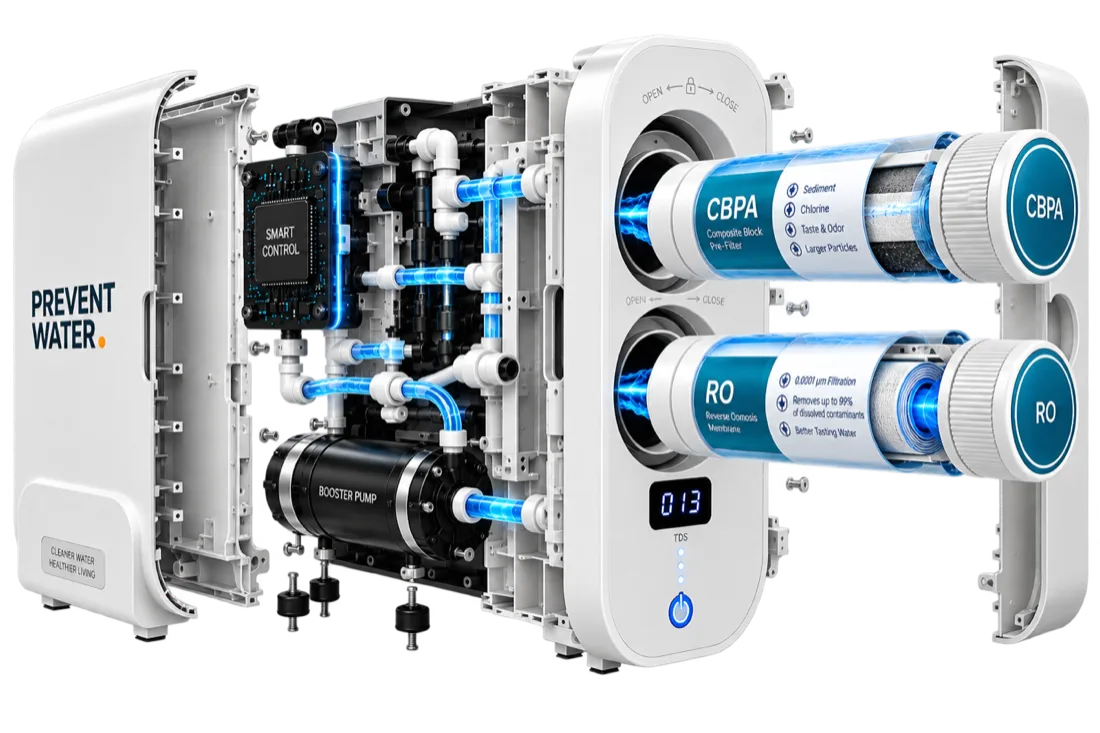
The internal layout, with its cartridge housings, hydraulic components and control electronics.
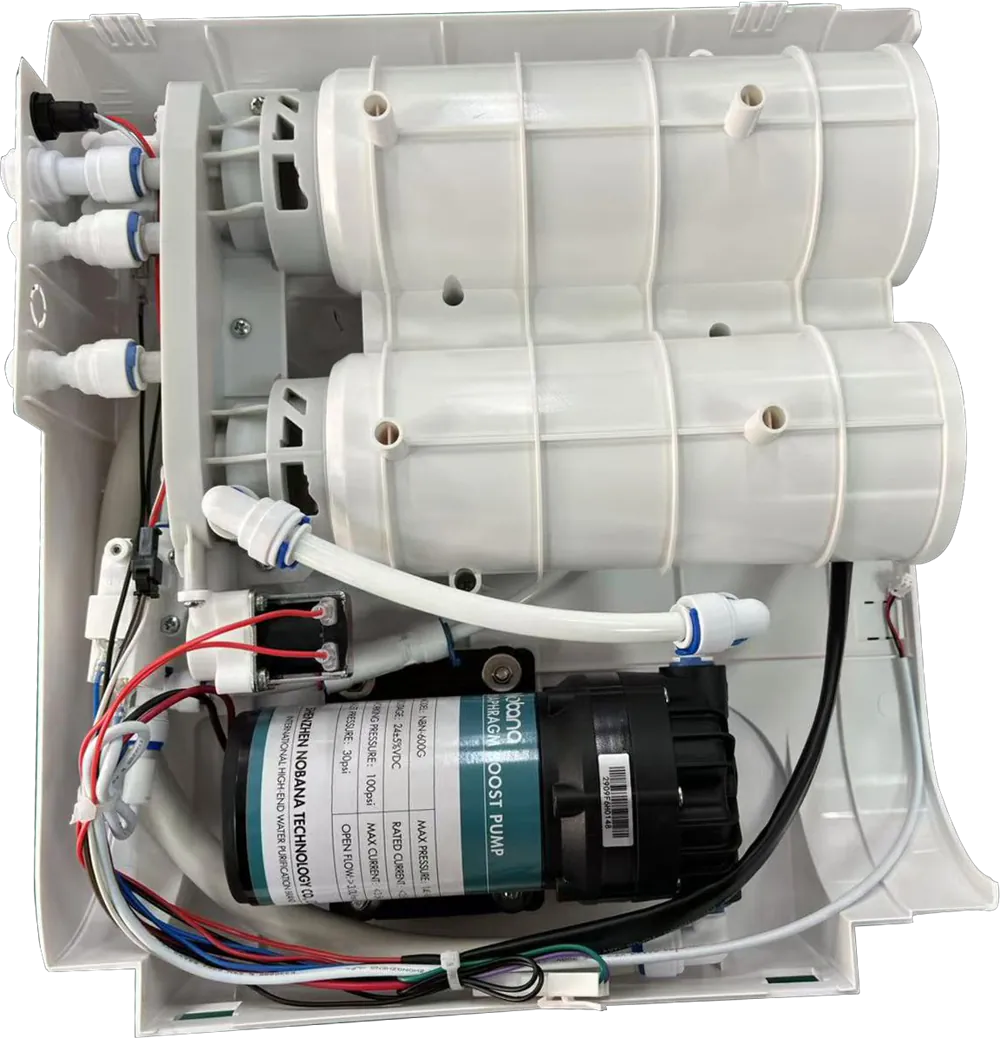
Interior of the PW RO 700 with cartridge housings, tubing and booster pump
Integrated waterway manifoldIntegrated waterwayRoutes water between the cartridge interfaces and hydraulic components.
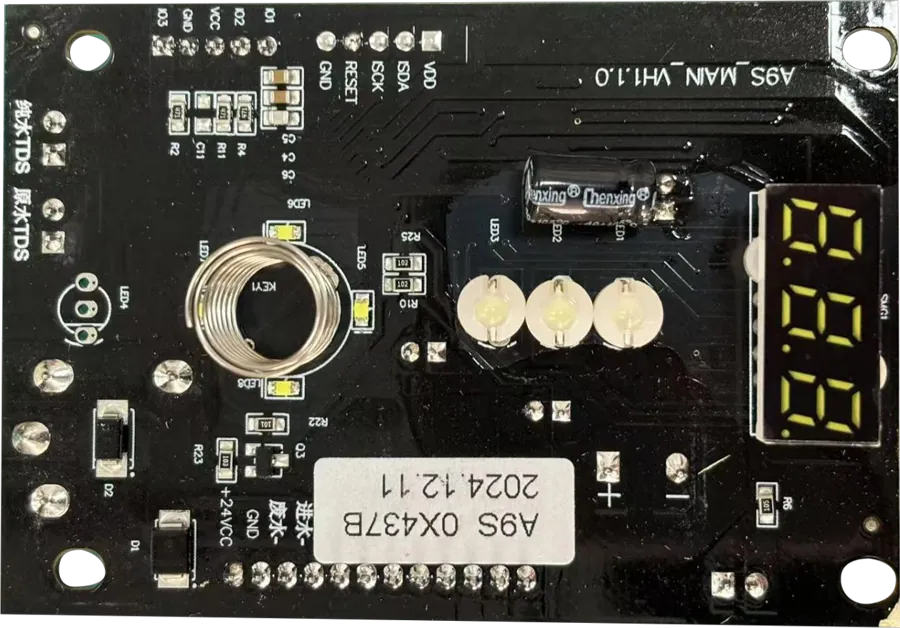
24 VDC24 VDC booster pumpRaises working pressure for reverse-osmosis production.
Control board with the TDS displayControl and statusTDS sensing and the board supervise operation. The pressure switch stops production as outlet pressure rises.
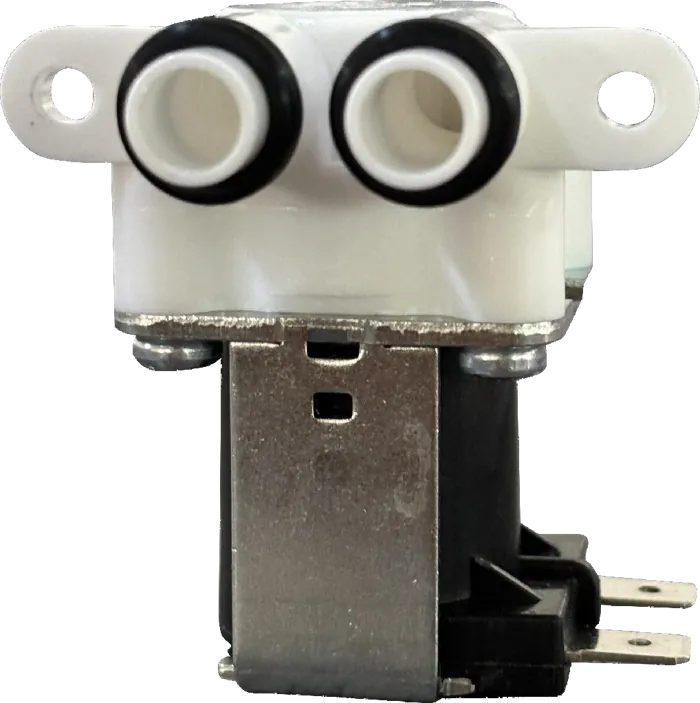
Inlet solenoid valveInlet and wastewater valvesThe inlet valve controls feed. The wastewater valve routes concentrate to drain. Purified water exits through the check valve.

Component views; placement varies by production revision.
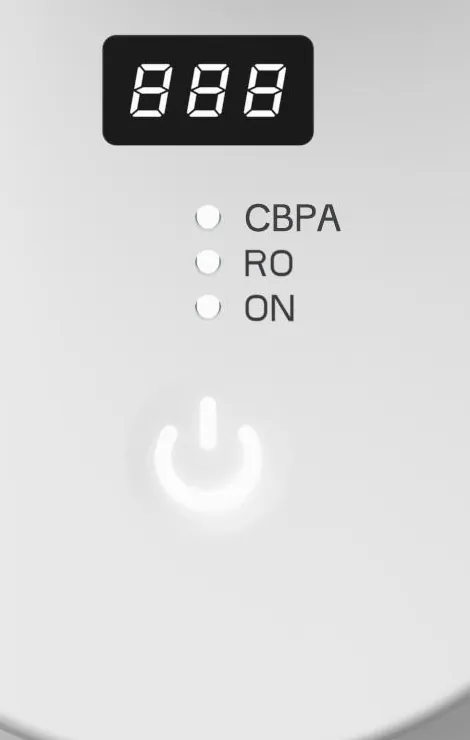
Front panel with the TDS display, CBPA, RO and ON indicators and the power buttonIllustrated display segments are not an operating TDS reading.
The intelligence

It filters. It monitors. It flushes.

05TDS monitoringThe display reports dissolved-solids information for operational monitoring. Compare stabilized readings with the service baseline.
06Filter-life monitoringDedicated CBPA and RO indicators help plan replacement. Actual service life depends on water quality and usage.
07Automatic RO flushingProgrammed flushing supports membrane operation and clears retained concentrate. The startup cycle is separate from the first-use flush.
TDS is an operating indicatorTDS does not identify individual contaminants or replace water-quality testing. A TDS reading alone does not establish drinking-water safety.
The experience

On demand. Without a storage tank.

Point-of-use drinking and cooking water from a suitable municipal potable cold-water supply.

700GPD membrane classNominal membrane capacity class.
1.83L/min published flowApproximately 0.48 gpm.
2:1Typical pure-to-drain ratioUnder normal operating conditions.
Functional water path
  1. 1CBPAFunctions 01, 02 and 03
  2. 2Booster pumpWorking pressure
  3. 3RO membraneFunction 04
  4. 4Mineral finishSeparate PW stage
  5. 5FaucetDrinking water
↓Concentrate to drain

PW alkaline mineral finish. Post-treatment after RO, separate from the two-cartridge core and the four purification functions. Composition and mineral profile depend on the installed cartridge.

Output varies with pressure, temperature, feed TDS, membrane condition and configuration.

Operating envelope

Published specifications.

Use these values together with the rating label on the installed unit. Performance depends on site conditions.
Treatment and feed water
Product family
PW RO 700 Direct Flow, tankless
Nominal membrane class
700 GPD
Purified-water flow
1.83 L/min · 0.48 gpm
Feed-water pressure
0.1 to 0.4 MPa · 14.5 to 58 psi
Feed-water temperature
5 to 38 °C · 41 to 100 °F
Membrane rating
Nominal 0.0001 μm
Pure-to-drain ratio
Typically 2:1; conditions apply
Hardware and connections
Unit dimensions
419 × 158 × 381 mm · 16.5 × 6.2 × 15.0 in
Published net-water volume
4,000 L; cartridge life depends on water quality
Internal booster pump
24 VDC; working current ≤ 3.0 A; maximum current ≤ 4.5 A
Pump working pressure
Nominal 0.5 MPa
Pump working flow
≥ 3,600 mL/min; open flow ≥ 6,000 mL/min
Connection tubing
1/4 in PE tubing in the supplied installation architecture
Power inputAdapter specifications can vary by production revision. Verify the installed unit rating label before electrical service.
Before installation

Prepare the site.

Correct site conditions protect the membrane, electronics and cabinetry.
Location
Indoor, dry, stable and accessible for cartridge replacement.
Clearance
Allow space around the 419 × 158 × 381 mm body for tubing bends and filter rotation.
Cold-water supply
Municipal potable cold water, with an accessible feed-water shutoff valve.
Pressure
14.5 to 58 psi. Add pressure regulation above the published limit.
Drain
Provide a code-compliant RO concentrate connection.
Electrical
Use the supplied adapter and a properly grounded receptacle that complies with local code.
Environment
Avoid direct sun, freezing, high heat and strong acids or alkalis.
Feed qualitySediment-heavy or unusually turbid water may require upstream sediment protection.
Professional installation: connect, inspect, commission
  1. 01PlanConfirm cabinet clearance, faucet position, feed-water valve, drain route and receptacle access.
  2. 02IsolateClose the cold-water supply and relieve pressure before making connections.
  3. 03Install the faucetUse the supplied seals and hardware at the dedicated drinking-water faucet.
  4. 04Connect the feedInstall the tee or adapter and connect the inlet tube to the port marked WATER IN.
  5. 05Connect the drainConnect the wastewater tube to WASTE / DRAIN and route it to the approved drain connection.
  6. 06Connect product waterRoute PURE WATER through the PW mineral finishing stage, where fitted, to the faucet.
  7. 07Restore water and powerConfirm tubing is fully seated. Open feed water, check for leaks, then connect power.
  8. 08CommissionRun startup flushing. Verify pure-water flow, drain flow, TDS response and leak-free operation.
First use

Do not skip the first flush.

Startup clears preservative, carbon fines and manufacturing residues, and establishes a service baseline.

20 to 30Minutes · initial flushFlush the new system before drinking.
AutomaticStartup cycleAbout one minute at startup; not a substitute for the initial flush.
RecordService baselineFeed TDS, purified TDS, flow and date.
Seasonal performanceRO output falls as feed water becomes colder. The supplied manual notes approximately 3% less production per 1 °C decrease under comparable conditions. Reduced winter output is not necessarily a fault.
Service planning

Maintain performance over time.

Replacement intervals are planning ranges. Water quality, usage, TDS trend, flow and taste remain important.

8 to 12Months · CBPAComposite-cartridge replacement planning range.
12 to 24Months · ROMembrane-cartridge replacement planning range.
Per cartridgeMineral finishFollow the PW-supplied specification and water usage.
Consider earlier replacement when
  • Purified-water flow decreases significantly.
  • Purified TDS rises from the service baseline.
  • Taste or odor changes unexpectedly.
  • Feed water is sediment-heavy or chemically challenging.
  • The filter-life indicator signals replacement.
Flush before drinking after a cartridge change
CBPAAbout 10 min
ROAbout 30 min
Front access, controlled replacement. Use the correct PW-approved cartridge and depressurize the system before releasing a cartridge.
Operating boundaries

Know the limits.

Designed for point-of-use treatment of a suitable potable cold-water supply.

Stop use when something is wrongImmediately disconnect power and close the feed-water valve if a leak, electrical fault, burning odor or abnormal behavior occurs.
01Installation boundariesDo not use hot water or operate outside the published temperature and pressure limits. Do not install in freezing locations or use a power circuit or adapter that does not match the rating label.
02Water-quality limitationsDo not rely on this system as the only microbiological barrier for an unsafe or unknown source without appropriate upstream disinfection and a validated treatment design. TDS and alkaline pH alone do not support health or therapeutic claims.
03Performance and componentsContaminant reduction depends on the installed cartridges, feed chemistry, pressure, temperature, maintenance and verified test or certification data for the exact configuration. Use genuine or PW-approved replacement components.
DocumentationProduct Book + Technical Manual.

Installation, operation, maintenance and service in one document. Keep it available during installation, commissioning, routine maintenance and technical support.

Download the manual ↓PDF · English · Rev 2.0 · 10 MB
Drinking WaterWant it in your kitchen?

See how the drinking water system is offered, with purchase and subscription plans, installation and cartridge care.

Technical questions.

No. It describes four purification functions plus three smart technologies. There are two physical cartridges: the CBPA composite cartridge performs the first three functions and the RO cartridge performs reverse osmosis. The smart technologies are not additional filters.

PW RO 700.
Let's check your kitchen first.

We confirm the cold-water supply, pressure, drain connection, cabinet space and electrical access before recommending installation.

Conversation and inspection: water source, what you have noticed, your goals and the installation conditions.On-site measurements, with the parameters and methods available during the visit.A written recommendation: what was observed, what was measured and whether any extra step is needed.
Prefer to talk? (352) 808-8763
Step 1 of 2 · Your home
Property
Water source